
AFAM: Hello Eric and thank you very much for finding the time to answer our questions. You are one of the AFAM founders. You were at the beginning of AFAM’s story in 2007. Please could you tell us more about the beginnings? Do you have maybe 1-2 anecdotes to share with us?
Eric Benhamou:
The way AFAM started was, after a visit made to Paris in 2007. I caught up with my long time friend Vincent Jouet (Ai 172), like me. We went to school together, he was my next door neighbor at KIN. We stayed in touch for the last 50 years. Vincent was then the President of the Arts et Metiers foundation. The directeur of the school was Jean-Paul Hautier. Both Jean-Paul Hautier and Vincent Jouet thought that the school had to build a deeper connection with the Gadz’Arts community in the US. We had a constructive discussion on the subject. Jean-Paul Hautier told me about his vision for the school. He was very committed to opening up collaborative research paths and connections with top American universities. I quickly suggested to him the way most schools do this, not just in France, but elsewhere in the world –– creating a nonprofit organization in the US that would represent the school as its ambassador, as well as connect and engage the entire alumni community in the US. At the time there were at least 50 Gadz’Arts in the Bay Area, and I suspected that there would be several times more nationwide. We formalized the creation of AFAM as a nonprofit, with 501(c)3 status.
Xavier Wartelle (today’s AFAM’s CEO) was one of the first friends that I went to talk to about this project. We had organized a couple of meetings and meals in Sunnyvale and Mountain View, and we found that there were even more people than we thought at first who were interested in engaging. We decided that AFAM should not only represent the school, but also the Arts et Metiers Fondation and the SOCE. That’s how it became a structure with deep ties to all three organizations. This was the beginning of AFAM.
AFAM: you left the AFAM board in 2022 but remained an active supporter of AFAM’s cause. You also decided to donate to the ELF ( Evolutive Learning Factory) fundraising campaign launched by the Arts et Metiers school. Could you please tell us a bit more about your motivation? Why did you choose to support the ELF project?
Eric Benhamou:
The broad context is that the world of higher education around the world is changing fast, particularly in engineering and scientific disciplines. The cost of education is increasing rapidly -- much faster than inflation. This requires some fundamental rethinking about programs and how to train the next generation of engineers to be useful and remain relevant. I felt that ELF was a well thought-out program, combining new disciplines such as AI with entrepreneurship, connection with industry, the community, and concern for the environment and the climate challenge. This program could bring the school to the forefront of engineering education in the 21st century, rejuvenate the educational process and the curriculum. The ELF concept felt to me like it was in tune with the time, with the needs of the industry and with what it means to be an engineer in the 21st century. I was very happy that it was initiated by the school, by Laurent Champaney as a head of the school and his team of advisors. I felt it had positive momentum, was embraced by the alumni community and by the government.
The other factor is that the funding for the project is based upon a strong engagement from the alumni organization. And I believe that alumni must remain involved with their school. Our school has one of the strongest alumni networks, but it was never really leveraged to influence the school’s educational content and to keep it at the forefront. And I thought this change was very healthy. That's the way American universities do it. I'm also an alum from Stanford, and know how Stanford alumni remain deeply connected to the school, and may influence the way the school is run, allocates its capital, uses its brand, and recruits. I think it should be the same for Arts et Metiers.
ELF is a good program, well structured, balanced. Not just a nice to have but absolutely a must have. If the school does not go through this transformation, it may decline into irrelevance. The government plays a significant role. The alumni’s role is much stronger than in the past. So, I felt this was one of the best ways for me to contribute to the school, and I decided to be a lead donor behind this project.
AFAM: Eric, you are a founder and general partner at Benhamou Global Ventures (BGV). BGV is financing automation, data and AI startups present in Silicon Valley, and also in France, India and Israel (and Japan is your next destination). What is the most exciting for you in the latest innovation that you are seeing?
Eric Benhamou:
Venture capital is my third career, having first been an engineer, then a CEO for most of my professional life. I got into it almost by accident when I became chairman of the companies which I had started and run for a long time. Going from CEO to Chairman meant I had a little more time on my hands. So I decided to reconnect with the entrepreneurship word and started to make investments as an individual angel investor into the next generation companies and mentor young entrepreneurs. Not at all for financial reasons, mostly for the chance to engage with the new generation of founders, and to help them build better companies. I then decided about 15 years ago that I should no longer do this as an amateur, but as a professional. I decided to structure my activities as a classical venture capital firm. BGV today is no different from the 1000 other venture capital firms that exist in this country. We have external investors including institutions, corporates, family offices and individuals. We are structured, and we behave the same way as other VC firms. But we have a couple of unique features. One is that we like to fund companies which are not born here in Silicon Valley, but elsewhere. You could ask, why do we do that? Well, because Silicon Valley is a very competitive and very expensive place, where it is very hard to find talents at affordable rates. The reality is that you have outstanding talents outside of Silicon Valley. When I was a young entrepreneur, the venture capital profession initially focused on proximity, meaning they would only invest in companies close to where the VC firm was located. This no longer applies, because you can connect with talents all over the world and build cross-border companies, regardless of geographies.
Besides, being an immigrant entrepreneur myself and all my partners, we completely understand why immigrant entrepreneurs will try harder because they've already had to expatriate themselves and restart in a new country. They've already met that test. They are already pre-qualified to be good entrepreneurs. This concept was originally used in Israel as Israel being a small country, has a lot of entrepreneurs and no domestic market to speak of. These entrepreneurs from the very beginning, have to think about creating products to be sold in the US, in Europe and elsewhere in the world. You cannot build a big company by just staying in Israel, you have to become cross border from inception. This model worked and was imitated by many other countries, France in particular, but also India. Increasingly, you find cross border startups involving many different geographies. So, we specialize in this because we believe in it as we’ve lived through this journey ourselves when we were entrepreneurs. This is a big differentiation from many of our colleagues in the VC industry.
The other differentiation, although it is less visible now, is that we made a big bet on the transformative power of AI. We made this bet not just two years ago, when the world discovered ChatGPT, we made this bet 10 years ago. We believe that enterprises across many different industries will be dramatically enhanced and transformed through the deployment of a new generation of tools, software and processes which are taking advantage of the power of AI. We call this enterprise 5.0. When enterprises started in the 70s, it was phase 1.0 of Information technology. Then we discovered the web, it was phase 2.0. Then we discovered mobility and the cloud, it was 3.0. Then the early phase of AI, maybe 15 years ago, this became 4.0. Finally, now when we have classical AI plus generative AI – it is Enterprise 5.0.
Basically, our work and our capital are focused on the intersection of these two trends: cross border innovation and Enterprise 5.0.
AFAM: As you know AFAM launched a new program Yosemite to help Gadz’Arts entrepreneurs who would like to embark on an entrepreneurship journey in the United States. What do you think about this new program?
Eric Benhamou:
I think it's an outstanding program because it creates a path for aspiring entrepreneurs to accelerate their journey to the US. And the reason why they should want to do this is because in most markets, in most categories, the US is by far the biggest market to conquer. So, if you're a young, budding entrepreneur and you aspire to create a category leading company, you cannot achieve this by staying in France. France is a mid-sized market. By staying there, you develop bad habits and you miss the chance to compete in the big league. If you come to the US early in your journey and decide that you have to beat the best here, then you will become the world leader.
So, I think this journey is essential for entrepreneurs that really have high ambitions, and would like to measure themselves against the very best. In general, the level of competition they will face here in the US is much higher. But if they decide to come here, it must be with the intent to build a global category leading company.
While France has done a good job cultivating its entrepreneurship culture in the last 10 years, it had a lot of ground to make up. In the 1980s and the 90s, entrepreneurship was just not that popular: there was not much venture capital in France and the concept of innovation was completely different from the one here. Company building was very hard. The incentives were not aligned correctly. There were not enough success stories. Frankly, moving out of the ranks of a big company to start a new business, was extremely rare and not even well regarded. There were strong cultural impediments that prevented entrepreneurs from expressing themselves in France. I'm glad that for a variety of reasons –– policy changes as well as natural evolution and globalization –– France moved to a completely different position and started to compete. In fact, I think right now in Europe, France is probably the best place for early stage venture capital, for starting businesses and for encouraging this entrepreneurship mentality. Today France is able to produce entrepreneurs who not only have the technical skills, but they have the business mindset to create a leading business, and so Yosemite is a program that fits with the time. The Yosemite program is a way to create relationships between mentors and mentees, between proven entrepreneurs and aspiring entrepreneurs.
AFAM:
What would be your piece of advice to Gadz’Arts who would like to open a company or develop activities in the United States today, in 2024 (apart obviously from joining the Yosemite program)?
Eric Benhamou: Well, I would say two things. First, I don't know of any entrepreneur that has had a completely linear trajectory from start to a blow-out finish. In fact, the trajectories of all companies, even the most successful ones, have ups and downs and ups and downs, and most of them go through really deep crises before they actually find their footing and create a real strong business. If they really want to proceed in this journey, they have to brace themselves for the kind of very stressful, I guess, lifestyle for themselves, for their families, for their employees. If they're not prepared for this and prefer to have a much more balanced lifestyle, this might be not for them. Not everyone is cut to be an entrepreneur. It may be fashionable today to claim to be one, but it doesn't mean that everybody can do it. In my experience, if you take 100 engineers randomly sampled from any year, you may have at most five who are really cut to be entrepreneurs. Certainly, it's a single digit number.
And the second piece of advice is that coming here in the US, they may have an idea of what they want to do, but most likely, this is not what they will end up doing. In other words, they will end up having to make changes, to adapt, to reinvent their business, to change their ideas.
When I first came into this country, I wanted to do an advanced degree at Stanford, a Master's or a PhD in Biomedical Engineering, because I had done some relevant work at the Arts et Metiers school in France, that prepared me for this. When I eventually got into Stanford, I realized that all the professors that I thought I would take classes from had moved, and were no longer teaching. They had moved somewhere else to some other university. So, I decided to change my plans. It turned out this was the first year at Stanford when they started to teach computer science and microprocessors and this new cohort of students were given an account on the ARPANET, which was a precursor to the Internet. So, I decided to completely change my plans and go into this program instead. This turned out to be the right thing to do at that time.
And today, there's another right thing to do, and I don't know what it is (although it probably is in the AI field), but you have to figure it out. So, this is basically part of the journey. You have to roll with what life presents to you. You roll with the surprises, with the changes, and it's completely okay. As a venture investor today, I know that the business plans that I fund when we invest in the company are very rarely the business plans that end up being executed, because you encounter several pivots along the way, and then you end up doing something quite different from your original idea.
AFAM: we are at the end of 2024, almost 2025 actually! 17 years for American Friends of Arts et Metiers and still counting! What would you wish for AFAM today, on the eve of 2025?
Eric Benhamou:
A few years ago, my hope was that AFAM would figure out a way to become self-sufficient financially, in other ways, to be able to have enough resources, to be able to fund programs such as Shasta and Yosemite, and fund themselves operationally. Fortunately, we were able to do that through the several generous donations. This is no longer what I'm hoping for, because it has already happened!
My hope today is that AFAM expands its role and its contributions to the school and becomes much more of an influential force. We have a disadvantage. We're highly geographically distributed. We're far away. But we also have an advantage. Many of us live at the center of the innovation world. We've learned a lot of things that cannot be learned elsewhere, certainly not in France. We can’t dictate things. We do not have this arrogance. Besides, we're too small for this, but we have a perspective that must be represented. In fact, as we're becoming a major contributor to the ELF program, from a financial donation perspective, that's great, but this should earn us a seat at the table. We have to be able to help the school make the necessary tuning adaptation to ELF to make is the most effective and relevant for the 21st century. Frankly, the school has to be able to produce entrepreneurs who build substantial companies, not just in France, but around the world. And we're not there yet. There's not enough of these success stories. And one of the best ways to fix that is for AFAM to weigh more in these strategic discussions: our financial contributions to the school are several times higher on a per capita basis, than they are anywhere else in the world, but our strategic contribution to the school is not. This is what we have to change.
AFAM: thank you Eric! And Happy New Year!
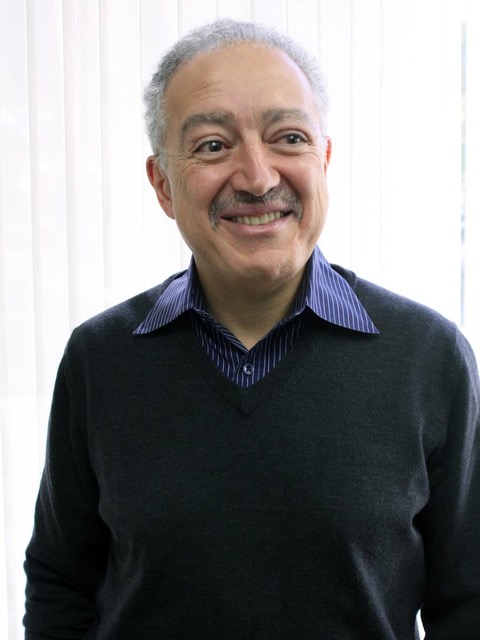
Picture: courtesy of Eric Benhamou
Other interviews in "Giving back to your community" series:
With Michel Vulpillat (Ch 183)
With Michel Mutschler (Ch 190)
 BLOG /
  CALENDAR /
  DONATIONS /
  MENTORS /