
March is International Women's History Month and International Women's Day is celebrated on March 8th! This month in our blog, we would like to highlight a few very inspiring and motivational journeys of A&M female students. Our next interviewee is Inès Feret ( Class 2022)
AFAM: Hello Inès, and thank you for being with us today. You are a MEng student at UC Berkeley, who went through the parcours US program. Could you please tell us a few words about the road that led you to Arts et Metiers and most importantly why and when you decided to become an engineer.
Inès: Sure! I started my academic journey with three years of mechanical engineering studies at La Sorbonne. During that time, I discovered the possibility of joining a Grande École through a parallel admission process. Arts et Métiers immediately stood out to me because of its values and its strong curriculum in mechanical and industrial engineering. I decided to take my chance, applied, and was fortunate enough to be accepted.
As for why I chose to become an engineer, I’ve always been fascinated by how the world works. Engineering felt like the most natural path for me because it’s a discipline that allows you to understand, innovate, and solve complex problems. Additionally, I’m passionate about both healthcare and robotics, and my goal is to bridge the gap between these fields to improve current medical solutions.
AFAM: could you tell us a bit more about your life and studies at UC Berkeley. What are your favorite classes and what do you enjoy the most about your education journey?
Inès: Life at UC Berkeley is amazing! One of the aspects I appreciate the most is the ability to choose from a wide range of courses, even in fields not directly related to engineering or mechanical engineering. Since I’m pursuing a Master’s in Mechanical Engineering, this flexibility allows me to tailor my education to my specific interests.
There’s also a strong emphasis on independent work: there are fewer lecture hours compared to what I was used to in France, which gives students more freedom to manage their time. This structure allows me to not only focus on my studies but also explore the region, network, and dive into other subjects.
This semester, my favorite classes are Interface Between Neuroethology & Neural Engineering and Design of Microprocessor-Based Mechanical Systems. At first glance, they seem unrelated, but together they offer a well-rounded approach to my professional goals. The neuroscience course helps me understand the fundamental challenges we aim to solve, while the microprocessor course focuses on multitasking programming, which is a crucial skill in many applications. Both classes are fascinating and intellectually stimulating. What I appreciate the most about this education system is the flexibility and the collaborative environment. There is little pressure compared to other academic settings, and a strong sense of support among students.
AFAM: what was the most challenging for you in the US ( or maybe before coming to the US)?
Inès: I would say the two biggest challenges have been cultural adaptation and financial aspects. The cultural differences between the US and France were more significant than I initially expected, and it took me some time to adjust.
Additionally, as everyone knows, education in the US is extremely expensive, which can be overwhelming or even discouraging. Fortunately, I was lucky to receive the support of the Sequoia Grant #2 from AFAM, and I am truly grateful for their invaluable help.
AFAM: recently you were a part of TechCrunch Disrupt 2024 in San Francisco. Could you please tell us more about this experience and what did this event bring you?
Inès: I was fortunate to attend this conference thanks to Berkeley, which sponsored a few tickets for students. Being able to see some of the most promising startups of the moment and engage with their founders was really an amazing experience.
I had the opportunity to make valuable connections to expand my network and attend highly insightful keynotes that helped me refine my professional vision. This event also reinforced my vision of AI which is now at the core of nearly every company, and integrating it into one’s career, especially in entrepreneurship is crucial.
AFAM: you live in the SF bay area. How do you like it? How do you spend your free time?
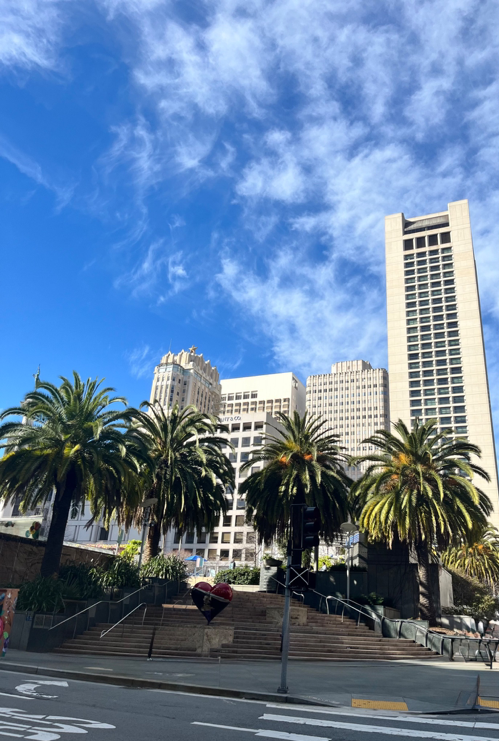
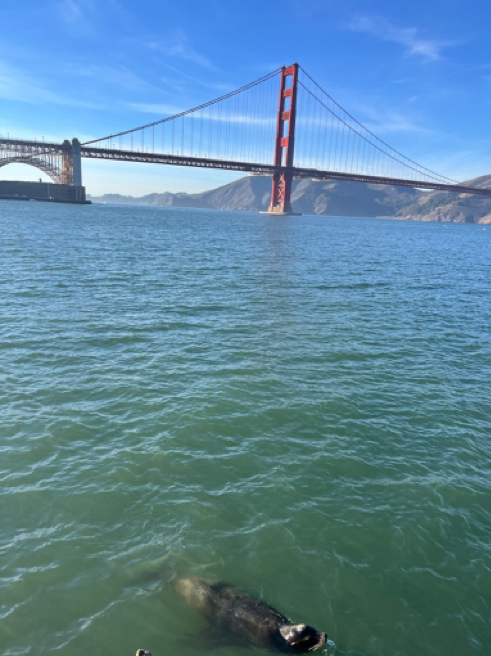
Inès: The Bay Area is absolutely beautiful, and there’s so much to do! One of the great things is that you don’t really need a car, public transportation is fairly accessible, which makes it easy to explore. San Francisco, in particular, is full of activities, and I’ve been lucky to experience some of them like Alcatraz thanks to the GadzMeet event in San Francisco, which was financially supported by AFAM.
The weather here is great, so I spend a lot of time outdoors discovering new places. I’ve also had the chance to travel a bit and visit Atlanta as well as Lake Tahoe, which were amazing experiences!
AFAM: Could you please tell us a few words about your current experience as an AI engineering intern? Any future plans you would like to share with us?
Inès: I’m currently working remotely as an AI engineering intern for a French startup. As I mentioned earlier, my experiences at Berkeley made me realize how important it is to integrate AI into my professional field. Because of this, I took the initiative to learn AI on my own, which led me to this internship.
In my role, I am developing an AI agent, which involves computer vision, programming, and deep learning. These are highly valuable skills, especially in robotics, and I’ve been enjoying the challenge of applying them in a real-world setting.
As for my future plans, I hope to find a full-time position that combines my passion for mechanical engineering and AI, ideally in the healthcare industry!
AFAM: thank you!
Pictures - courtesy of Inès
Union square and Golden Gate Bridge in San Francisco, Lake Tahoe ( picture from Inès' October trip)

Other interviews in March "Zoom on" series:
 BLOG /
  CALENDAR /
  DONATIONS /
  MENTORS /