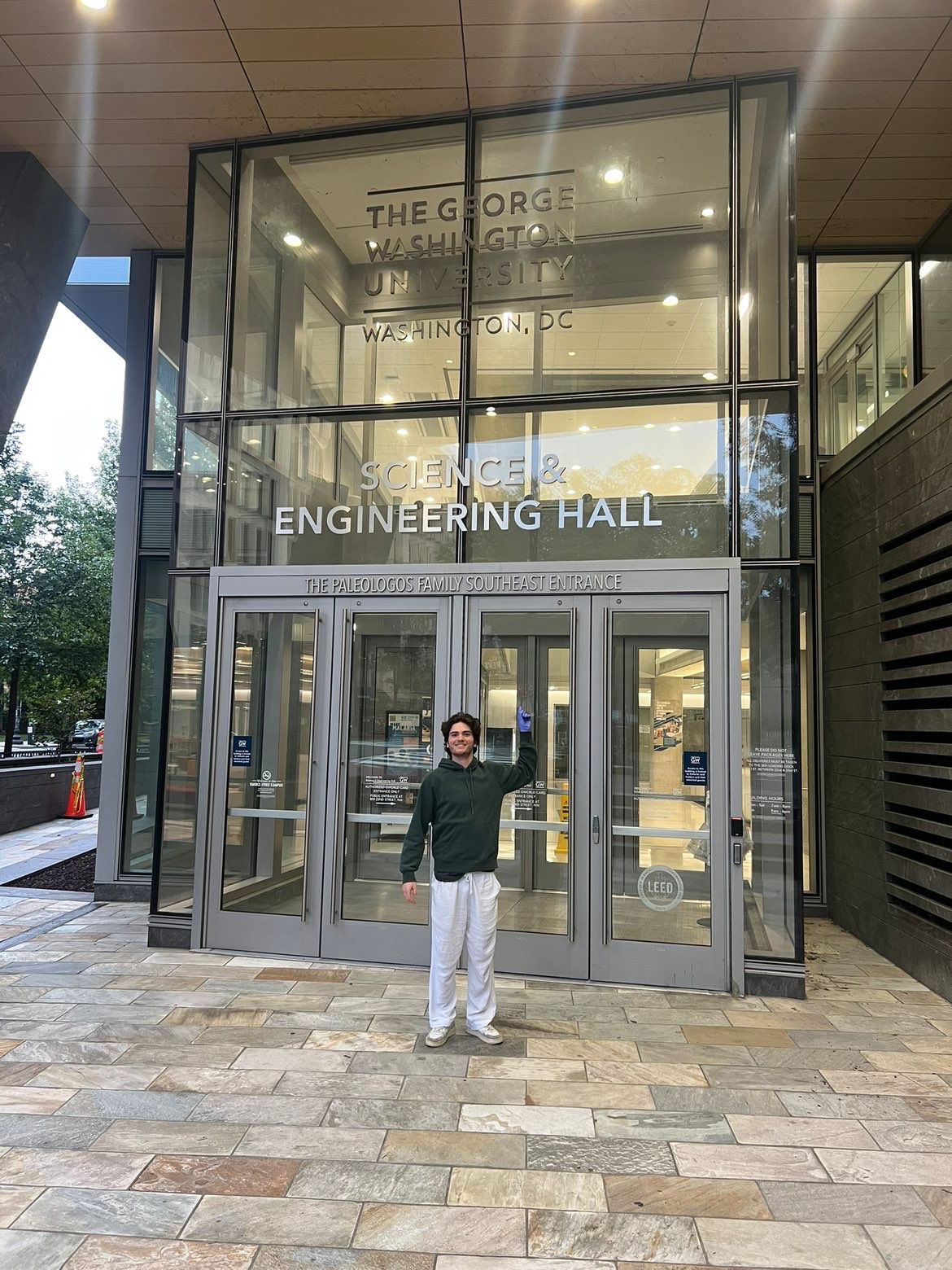
AFAM: Hello Léo, you are an intern at Experimental Fluid Dynamics and Nuclear Thermal-Hydraulics laboratory at the George Washington University ( Washington DC, USA). Please tell us a few words about your internship role?
Léo:
So, during my internship I'm working in experimental fluid dynamics. Basically, to study a flow, measuring velocities, shear stresses, sometimes even reconstructing pressure fields, we use optical methods with lasers, like PIV or LIF. The nice thing about them is that they're non-intrusive: we don't disturb the fluid with a probe, we just "look" at it with light.
The problem is that as soon as you have a slightly complex geometry, which is exactly where these measurements matter most, it becomes really hard to get a clean, undistorted line of sight for the laser. When light passes through the wall and then the fluid, if those two materials don't have the same refractive index, the image gets distorted. It's a bit like looking at a straw in a glass of water and seeing it 'break' at the surface, so your measurements end up geometrically off.
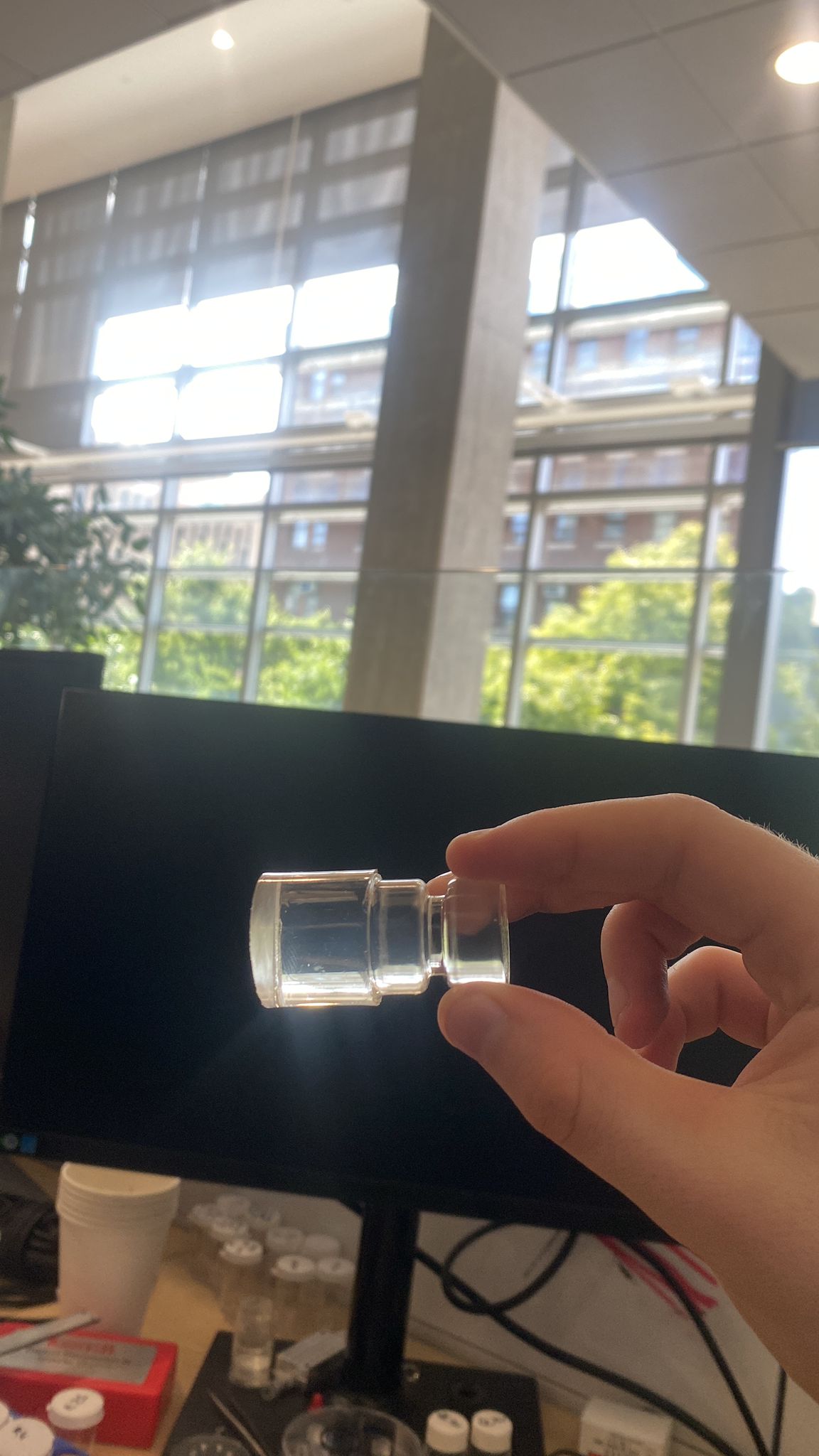
The way to fix this is what we call refractive index matching: you make the wall and the fluid "optically invisible" to each other by giving them the same index. And that's basically my job here, I'm developing a new material, matched to water, that lets us do accurate laser-based flow measurements in complex geometries, with the shape we want, at a reasonable cost and with the right mechanical properties.
AFAM: how did you find this internship? Was it hard? What makes you the best fit for this role?
Léo:
I'm in my final year at INSTN, and part of the program is to do an internship connected to one of the subjects we're taught, in my case, hydraulics. So, I started reaching out to research labs. I focused on that side because in the nuclear field, without American citizenship, a lot of doors are basically closed, so research labs were the natural fit. And when I came across this subject, I found it really interesting, especially because it's not limited to one application: it can potentially be used anywhere in industry where you need to take regular, non-intrusive measurements in a flow.
Was it hard? Honestly, I think if you're passionate enough and you keep an open mind, nothing is really too complicated. You find solutions by staying focused on the problem in front of you and breaking it down.
As for what makes me a good fit, I already had a solid scientific background on the research side, and I think that matters a lot here. You can't be afraid to take initiative, to try things, and to lean on rigorous mathematical methods to check and validate your own results and measurements. That mindset is really what this kind of work needs.
AFAM: We currently have several students in our Shasta internship program. What piece of advice can you give them?
Léo: Show that you're genuinely interested, don't give up, and send out applications everywhere.
Tailor your CV to each offer. Use strong action words, and use the STAR method to talk about your experiences : Situation, Task, Action, Result. It works really well, recruiters love it. And use AI to your advantage: one thing that works great is asking it to act like an ATS filter for a specific job offer, so you can see how your CV holds up and adjust it.
Your LinkedIn profile is an extension of your CV but keep in mind you don't necessarily have to list every single professional experience on it. Be selective.
And don't hesitate to add a 'Leadership' section it really helps show what you're capable of beyond the technical side. And there again, use the STAR method to back it up. PUT NUMBERS (money, people..)!!
AFAM: how did being a Gadz’Arts help you in your professional life so far?
Léo: So far not that much, I'm mostly relying on ENSAM recognition. One of the professors in the lab was French and knew the school. I think it was helpful.
AFAM: You live in Washington DC? How do you like it? What do you enjoy outside of your work?
Léo:
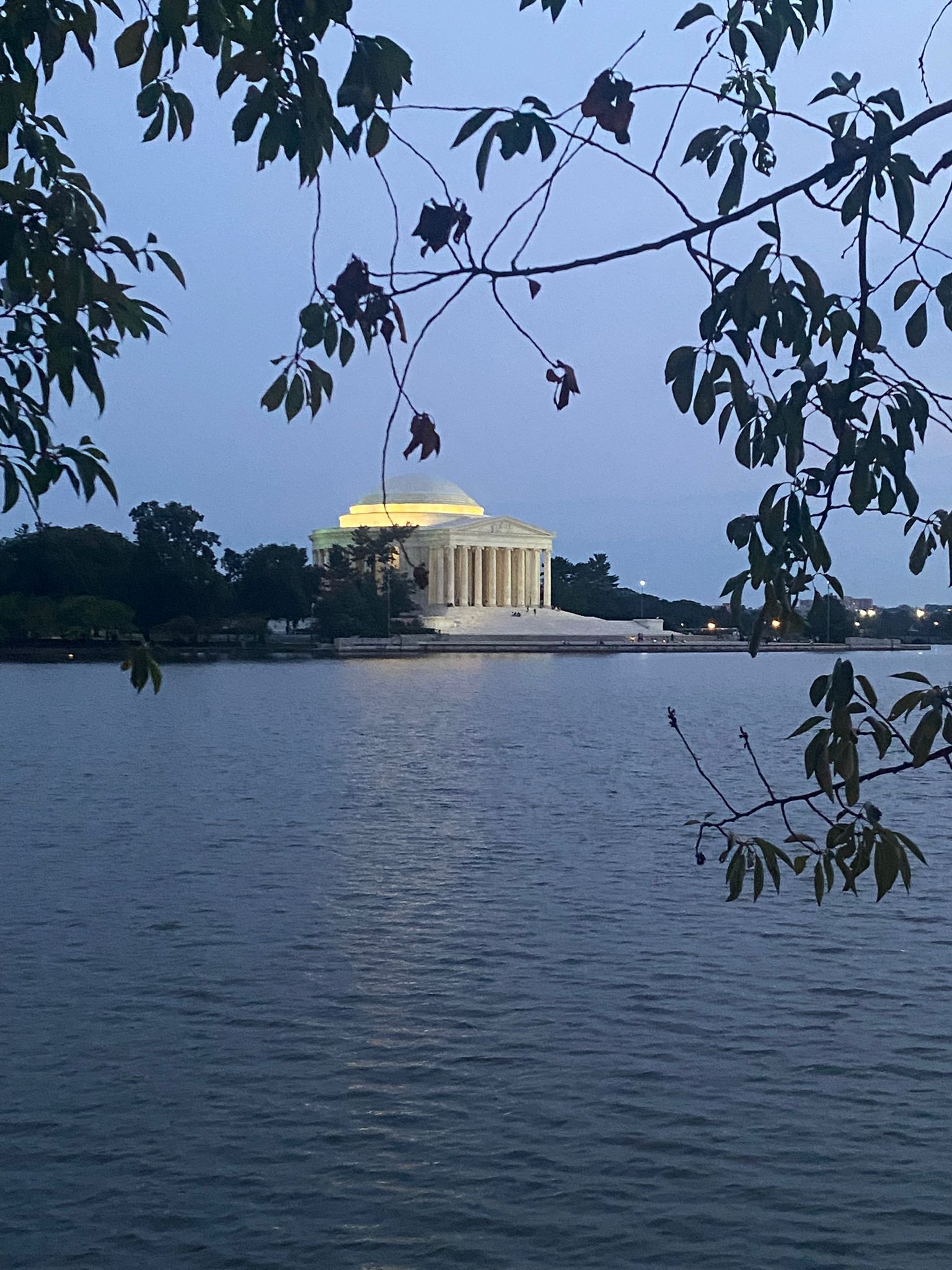
Yeah, I live in Washington DC! The city is fairly big and it has a metro system, so that's really convenient. With this being said, my advice would be: don't hesitate to buy an old, cheap car once you're there, it pays off quickly given how much you end up driving day to day. I'm lucky because I'm not too far from where I work, but I think in most American cities a car is really recommended. The streets are built around car life, and most buildings have an underground garage.
Outside of work: it's pretty cool, I'm right next to where the United States became independent. The city is steeped in history, so I actually got myself up to speed on American history. It helps you understand a lot about how the country works, and it's interesting because the American Revolution is very connected to the French Revolution.
Apart from that, the city is lively. I've met quite a few people from different circles : sports, the lab, friends of friends, so there's always something to do. And I'm only about four hours from New York by bus, so of course a little trip there was kind of a must.
AFAM: thank you, Léo
To learn more and join the Shasta internship program offered by AFAM, please click HERE
All pictures: courtesy of Léo Nerini
 BLOG /
  CALENDAR /
  DONATIONS /
  MENTORS /