
- Details
March is International Women's History Month and International Women's Day is celebrated on March 8th! This month in our blog, we would like to highlight a few very inspiring and motivational journeys of A&M female students. Our first interviewee is Sixtine Guérin ( Me 222)
AFAM: Hello Sixtine, please tell us a little about yourself and what you are currently doing.
Sixtine: Hi! I started at the Metz campus before moving to Paris for the Parcours US track. Now, I’m pursuing a Master's in Supply Chain at Georgia Tech.
AFAM: What were the biggest challenges you faced, first during your application process and then after arriving in Atlanta?
Sixtine: One of the main challenges during my application was making an informed decision about where to study. I had to choose between two highly ranked universities in Industrial Engineering—Michigan and Georgia Tech—without having much firsthand knowledge beyond what I could find online. When you're still in France, it's difficult to fully picture yourself in a new environment, and resources are much easier to access once you're actually there. After arriving in Atlanta, the biggest challenge was navigating everything Georgia Tech has to offer. From joining clubs to exploring different buildings, labs, and opportunities, there are so many possibilities that it can be overwhelming. Even now, I feel like there’s still so much I haven’t discovered!
AFAM: What were your favorite classes? And what did you like the most about your educational journey?
Sixtine: Out of the ten classes I took, my favorite was the most practical one. We visited warehouses, met professionals working in the industry, observed the technologies they use, and then analyzed them critically based on the theories we studied in class. We combined hands-on experience with optimization calculations and theoretical background and I really liked it. I enjoyed every stage of my academic journey because each one built on the last. In preparatory classes, I developed critical thinking and managed a heavy workload. At Arts et Métiers, I explored a wide range of subjects, from laser technology to lean manufacturing, which helped me adapt quickly. Finally, specializing in Industrial Engineering and Supply Chain in the U.S. was exciting since I had always wanted to study and work here.
AFAM: You are a Sequoia #2 grant recipient. Why was it important for you to receive financial support from AFAM?
Sixtine: Studying in the U.S. is extremely expensive—my master’s program alone costs $72,000, and that’s just for tuition. When you add living expenses, the total becomes even higher. Any financial support is a huge help, and I’m very grateful for it.
AFAM: How did you like the U.S.? How did you spend your free time?
Sixtine: I love the sports culture here—being able to participate in different sports and seeing the strong sense of pride people have for their state, country, and school. I also appreciate the mindset that hard work always pays off; if you really want something and put in the effort, you can achieve it. In my free time, I joined the rugby team and running clubs, which were great ways to stay active and meet people. I also took the opportunity to travel and explore different states. I had contacts in Alaska and Hawaii, which allowed me to visit and experience the national parks there.
AFAM: Any advice for students applying or considering applying to American universities?
Sixtine: I would encourage them to approach it as a new experience and fully immerse themselves in the culture, rather than just applying for the prestige or to have a well-known university on their resume. If you only focus on the name, I believe you’ll miss out on something truly valuable.
AFAM: thank you!
Pictures - courtesy of Sixtine
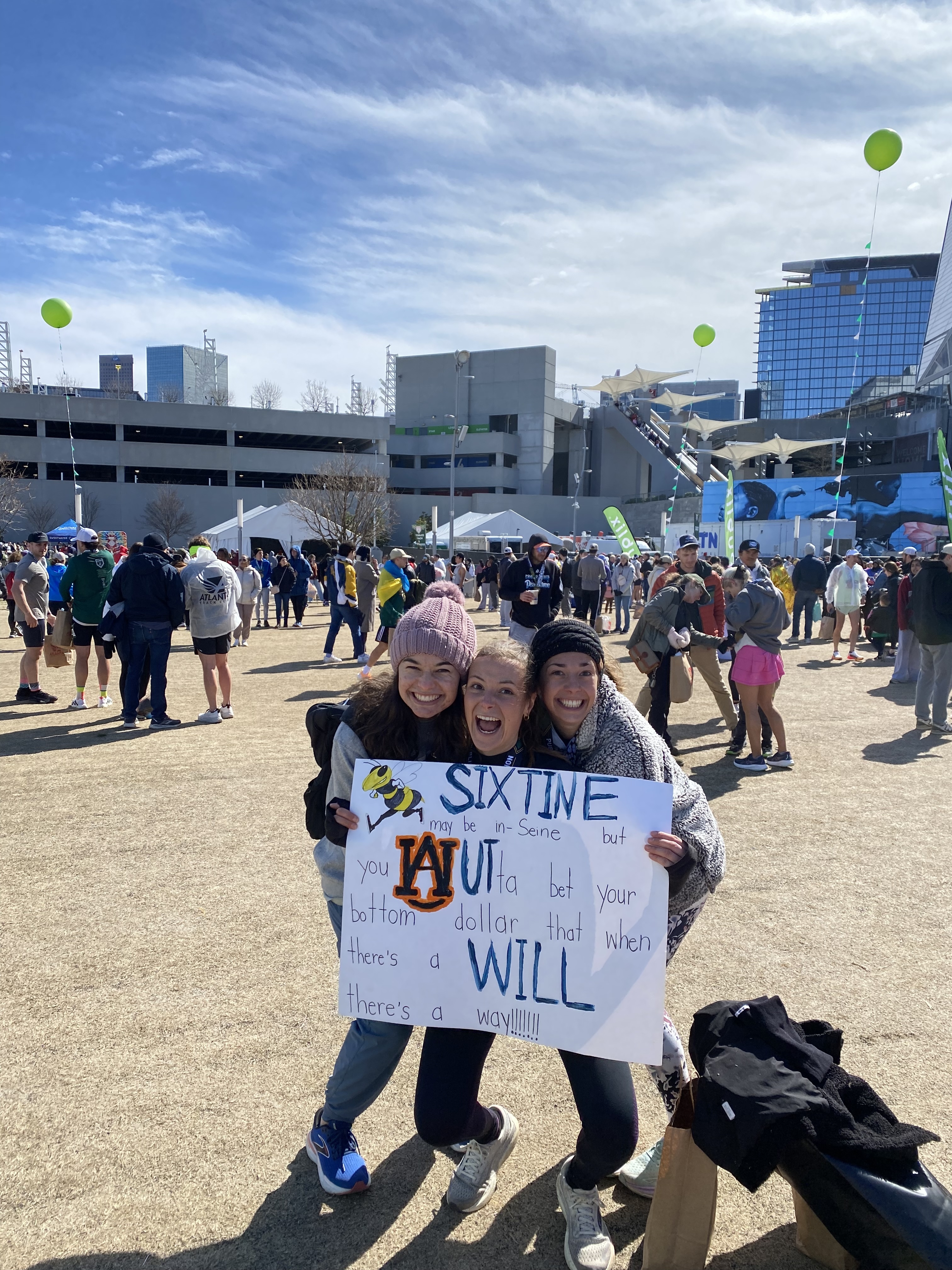
Half Marathon Race in Atlanta
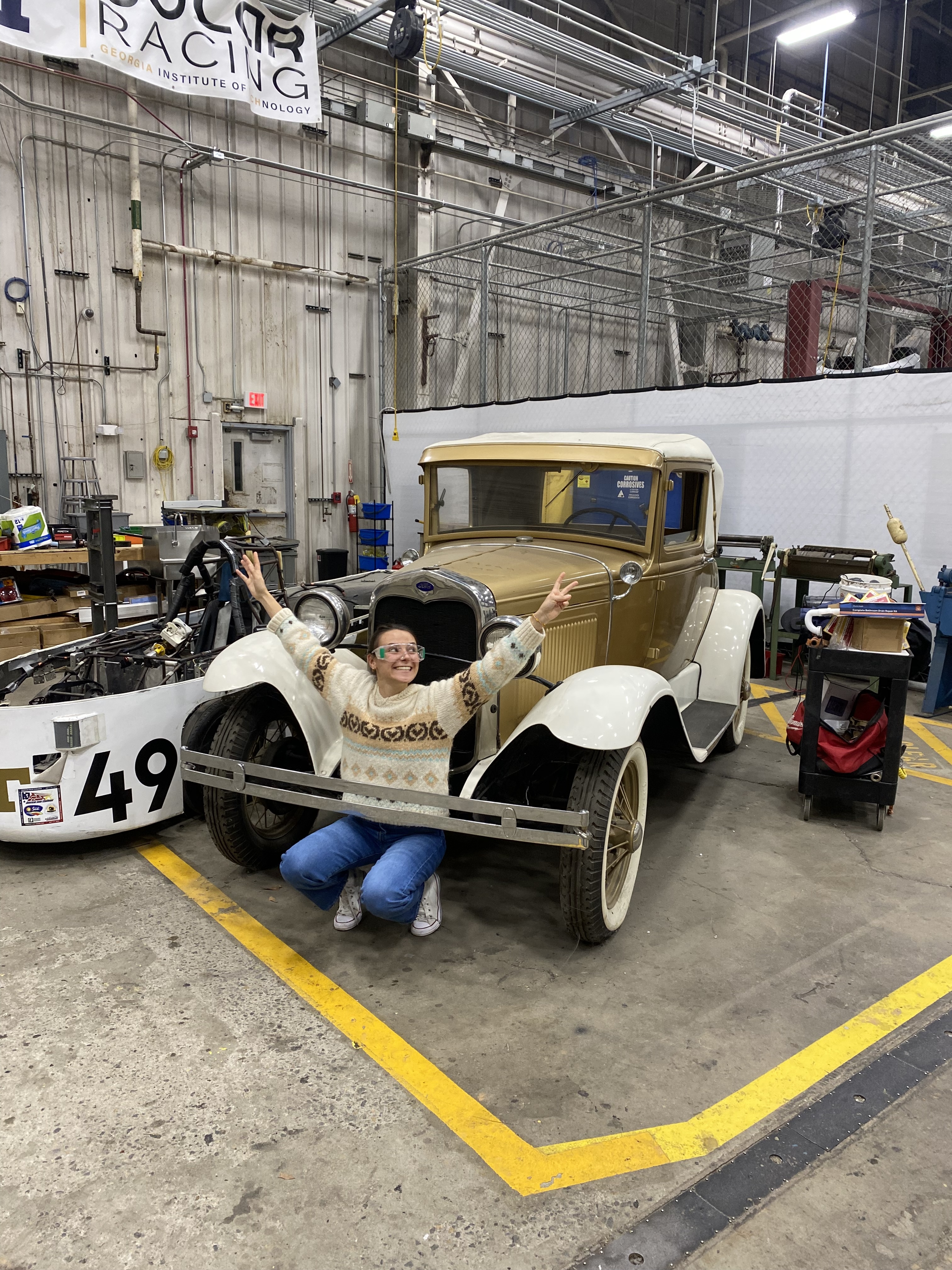
Georgia Tech Vehicle Workshop
- Details
AFAM: Hello Mickael, please tell us a few words about yourself.
Mickael: Hello, my name is Mickael. I'm a master's student at MIT studying Financial Engineering. Prior to joining MIT, I studied at ENSAM in Cluny and at Georgia Tech, where I completed my dual degree in Mechanical Engineering. Currently, I am working for MIT Golub Center for Finance & Policy conducting a data science project to develop macroeconomics factors for financial securities analysis.
AFAM: You are a student at MIT. What was the most challenging part for you, first when you applied to MIT, and then when you arrived in Massachusetts?
Mickael: I think the most challenging part about applying to MIT was that I applied outside of the "parcours US" since I was already enrolled in the Georgia Tech dual degree program. As a result, I was not applying alongside others in the same program. Arriving in Massachusetts was not a huge adjustment for me, as I had already lived in Atlanta, and Massachusetts has a lifestyle closer to that of Europe. Nevertheless, one of the biggest differences is the weather, which is quite extreme in both winter and summer!
AFAM: What are your favorite classes? And what do you like the most about your educational journey?
Mickael: My favorite classes are the financial product-focused ones at MIT, as they provide a hands-on approach, which I think is very useful for a career in financial services. Another class that particularly sparked my interest is a statistics course that provides intuition behind Machine Learning models. What I appreciate most about my educational journey is that I have studied multiple topics along the way, spanning from Engineering to Operations Research and now Finance.
AFAM: You are a Sequoia #2 grant recipient. Can you tell us why it was important for you to receive financial support from AFAM?
Mickael: Studying in the US comes with a high cost of living. Receiving the Sequoia grant helped me cover my core degree expenses in Cambridge, which was a great support in kick-starting my academic journey at MIT.
AFAM: Do you enjoy living in the US? How do you like to spend your free time?
Mickael: Boston is a great city to live in and explore. I enjoy spending my free time walking through the city, as it is one of the most walkable cities in the US! MIT is located in front of Harvard bridge which allows us to have regular walks in downtown Boston. I particularly like walking in Boston Public Garden, Back Bay and the South End (at the end of the article you can see a picture of Boston Public Garden in the Fall and the frozen Charles River in January).
AFAM: Any advice you would like to give to students who are applying or would like to apply to American universities?
Mickael: I would definitely advise students to apply to the "parcours US" facilitated by ENSAM, as I have heard great things about it from students who completed the program and were accepted into great US universities. Additionally, I encourage students to use their years at ENSAM to work on projects closely related to the subject they want to study in the US, as this is something universities highly consider.
AFAM: Thank you for your time.
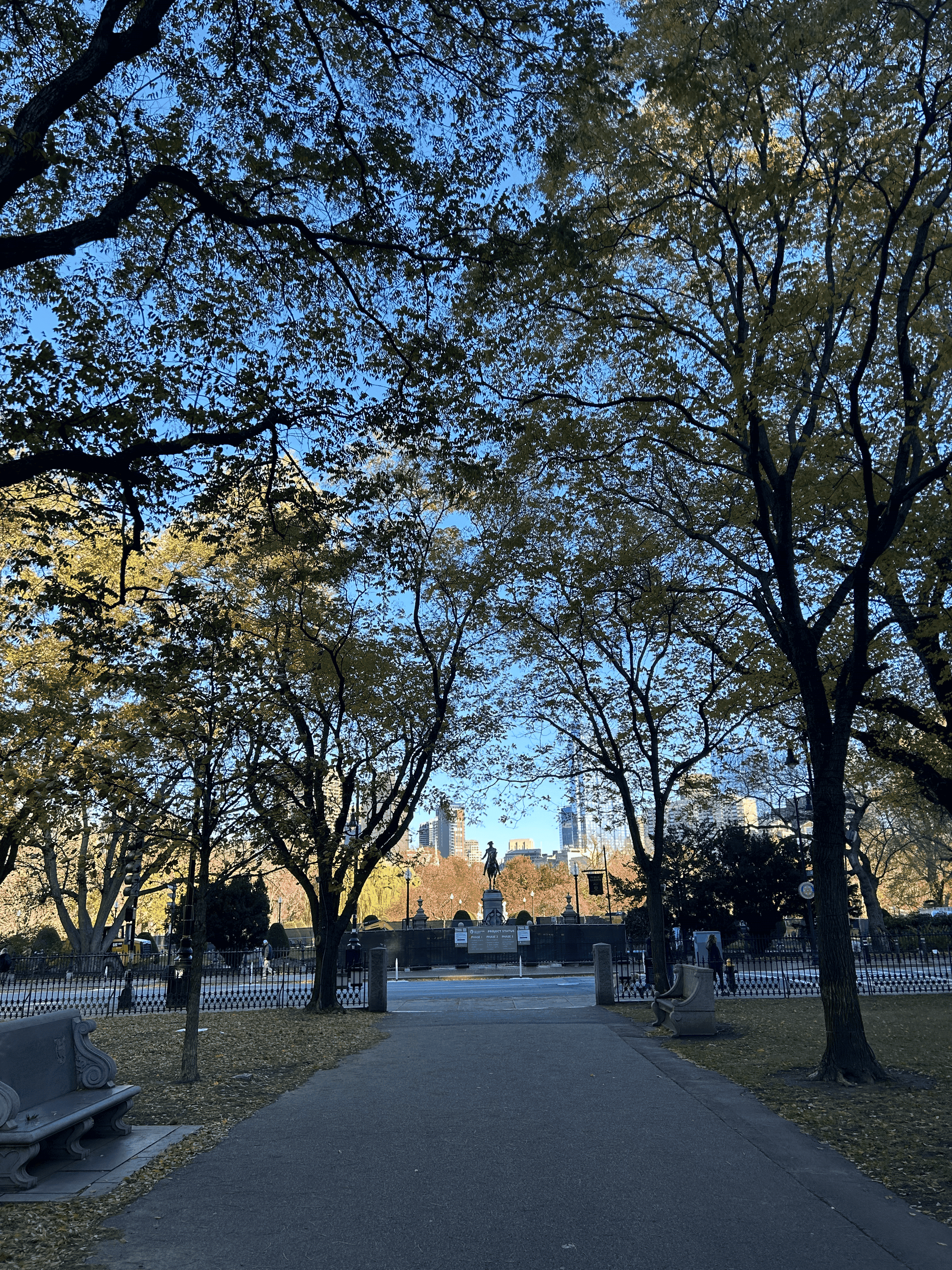
Boston Public Garden in the Fall
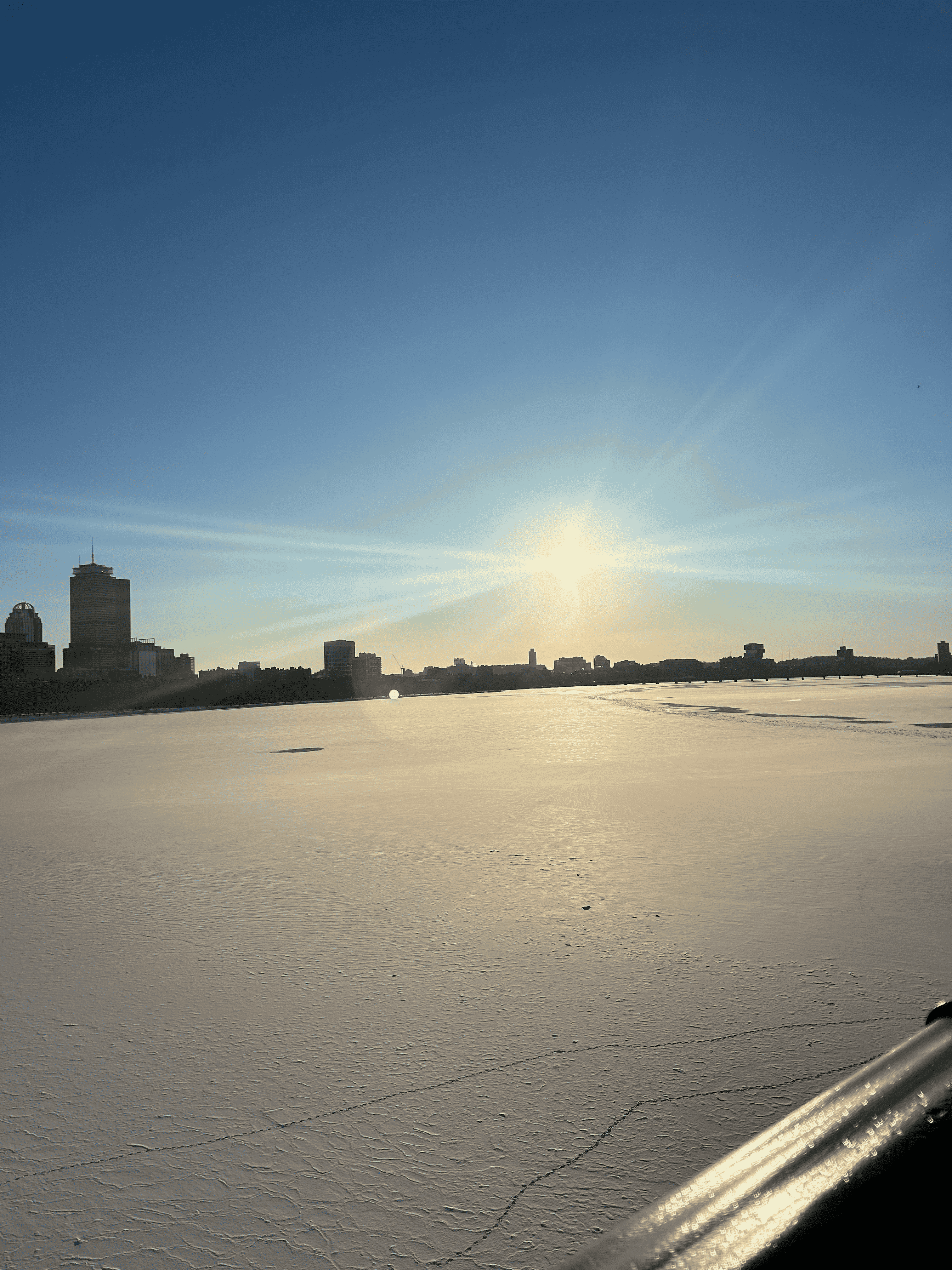
frozen Charles River in January
- Details
AFAM: Please tell us a few words about yourself
Sebastien: Hello I am Sebastien, I am currently enrolled in the Master of Engineering in Mechanical Engineering in UC Berkeley. I did the US track in Paris after spending 1 year on the campus of Châlons-en-Champagne.
AFAM: What was the most challenging for you first when you applied to American Universities and second, when you arrived in California?
Sebastien: When I applied to American universities, the most challenging part was understanding the application system, which is very different from the French system. Writing personal statements and essays that reflected both my academic and personal journey required a different approach than the one I was used to. Additionally, securing financial support was a big concern, as studying in the U.S. can be quite expensive.
When I arrived in California, the biggest challenge was adapting to a new academic environment and a different way of teaching. Classes are more interactive, and there is a greater emphasis on collaboration and personal initiative. At the same time, adjusting to life in the U.S.—from administrative processes to cultural differences—was an important learning experience.
AFAM: What are your favorite classes? And what do you like the most about your educational journey?
Sebastien: My favorite class was Data and Statistics for Engineers. It was a new experience for me, yet some of the concepts were already familiar, which made it both challenging and exciting. I particularly enjoyed learning about machine learning and data management, as they provided powerful tools to analyze and interpret complex datasets.
One of the highlights of this course was a project where we worked on predicting the real estate market in Berlin. This allowed me to apply theoretical knowledge to a real-world problem, using data-driven models to make forecasts. It was fascinating to see how statistical methods and machine learning algorithms can be leveraged to gain insights into market trends.
What I like the most about my educational journey is the opportunity to work on innovative projects, collaborate with diverse teams, and challenge myself intellectually. The freedom to explore different fields, even beyond engineering, has been an enriching experience.
AFAM: you are one of the Sequoia #2 grant recipients. Please tell us why it was important for you to get some financial support offered by AFAM?
Sebastien: Receiving the Sequoia #2 grant was crucial for me because studying in the U.S. represents a significant financial challenge. This support has allowed me to focus more on my studies and research projects without constantly worrying about financial constraints. It also gave me the opportunity to fully engage in academic and extracurricular activities, which are essential for making the most of this experience.
Beyond the financial aspect, being supported by AFAM is also a source of motivation, as it shows that there is a strong network that believes in and encourages French students pursuing studies in the U.S.
AFAM: Do you like living in California? How do you like to spend your free time?
Sebastien: Yes, I really enjoy living in California! One of the things I appreciate the most is the weather, which is much sunnier and warmer compared to France. It makes everyday life more enjoyable, whether it’s studying outside or exploring new places.
I also love the Berkeley campus, which is a great place to walk around and discover. Beyond campus, the Bay Area cities are amazing to explore—San Francisco, with its iconic landmarks and cultural diversity, and other nearby places that offer beautiful landscapes and outdoor activities.
In my free time, I like to stay active, whether it’s working out at the gym, playing football (soccer), or just going for a run. I also enjoy going out with friends, discovering new restaurants, and experiencing the local culture.
AFAM: Any piece of advice you would like to give to parcours US students who will be arriving in the US next year?
Sebastien: My advice would be to be open-minded and proactive. The U.S. academic system values participation and initiative, so don’t hesitate to engage with professors, ask questions, and seek opportunities beyond coursework.
Also, take time to build a support network—whether it’s with other French students, international students, or local friends. It helps a lot with adapting to the new environment.
Finally, don’t be afraid of challenges! The transition can be overwhelming at first, but every difficulty is an opportunity to learn and grow. Stay curious, and enjoy the experience!
AFAM: thank you for your time, Sebastien
Photos below - courtesy of Sebastien
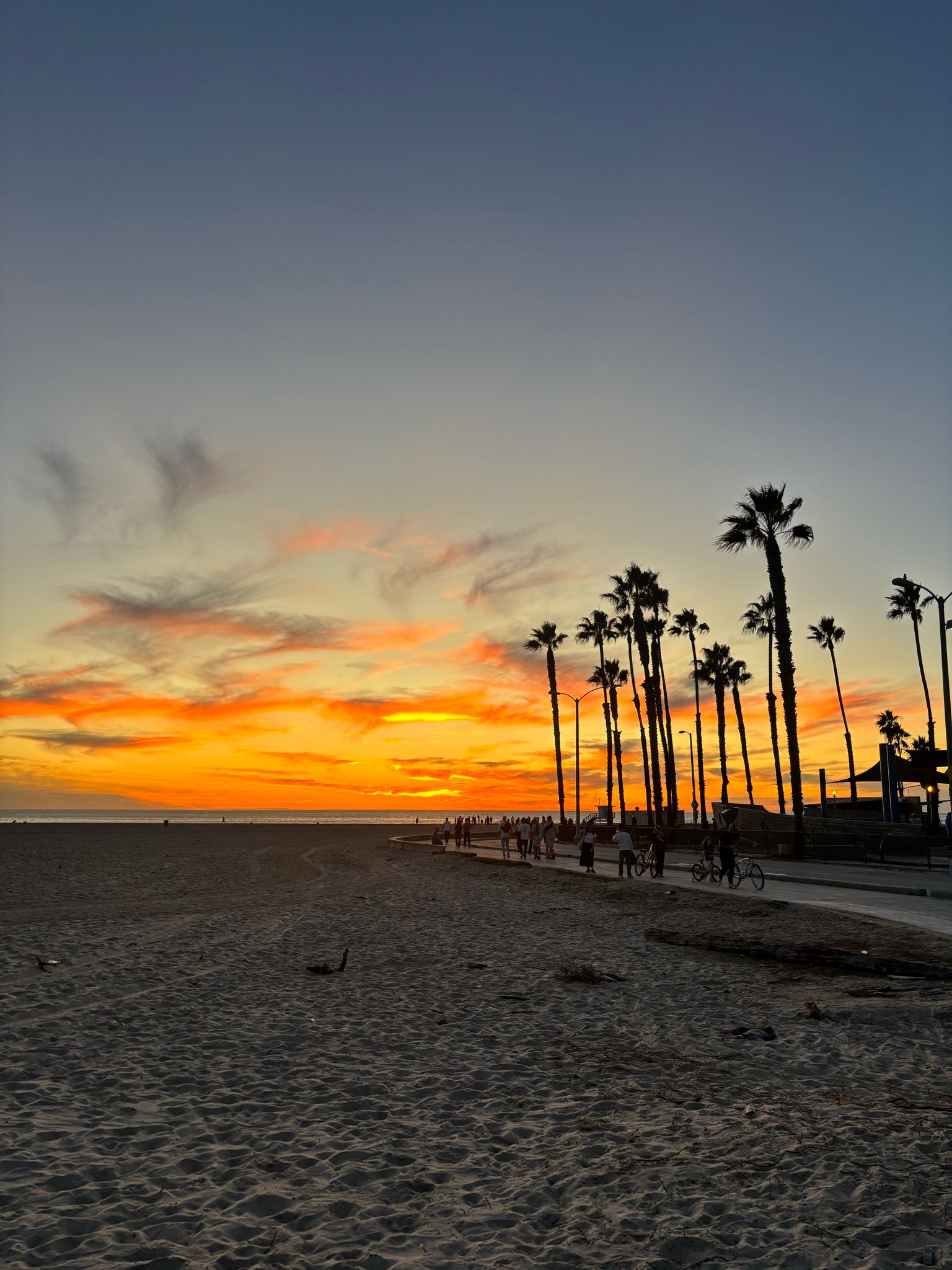
Venice Beach
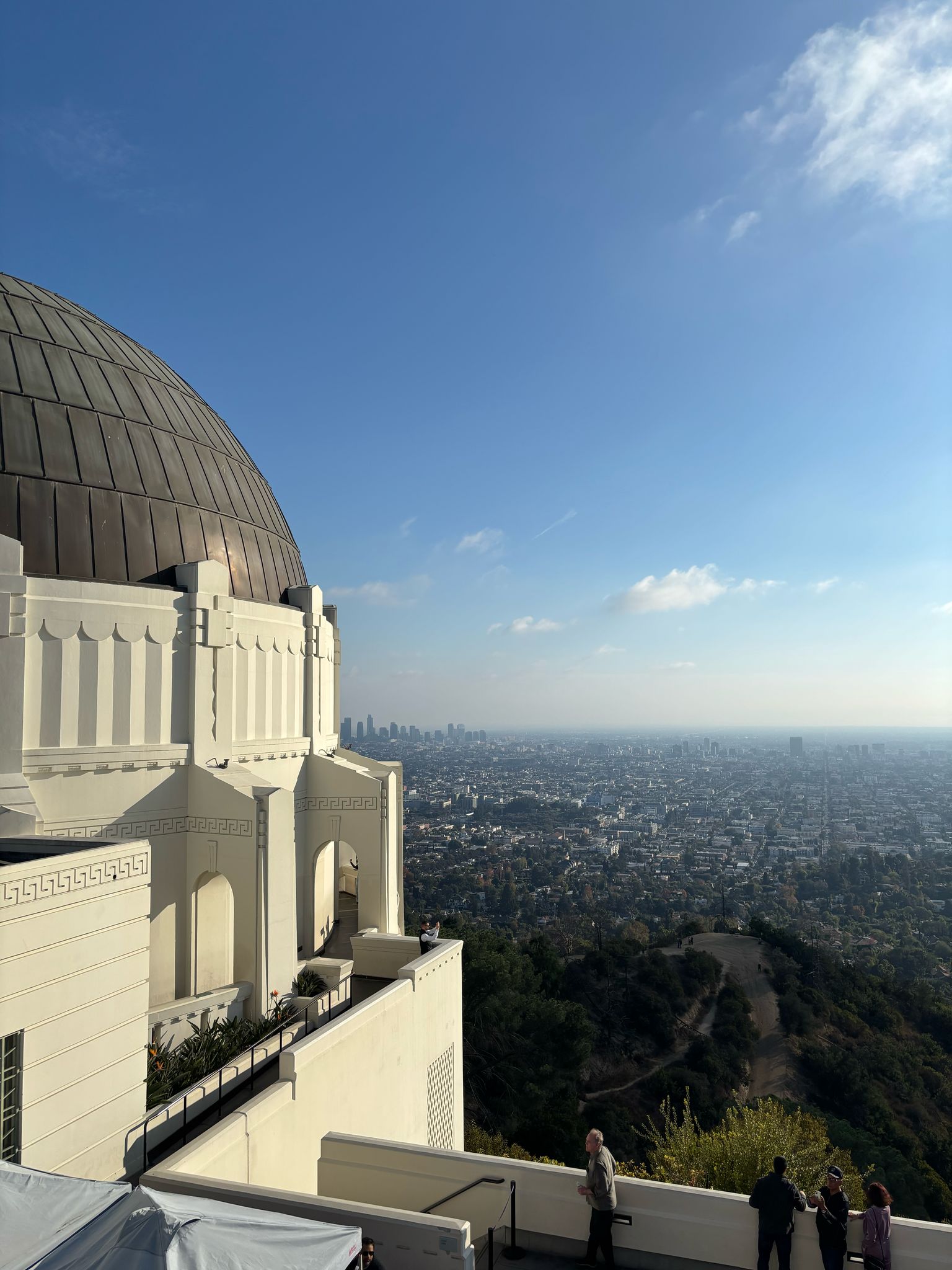
Griffith Observatory
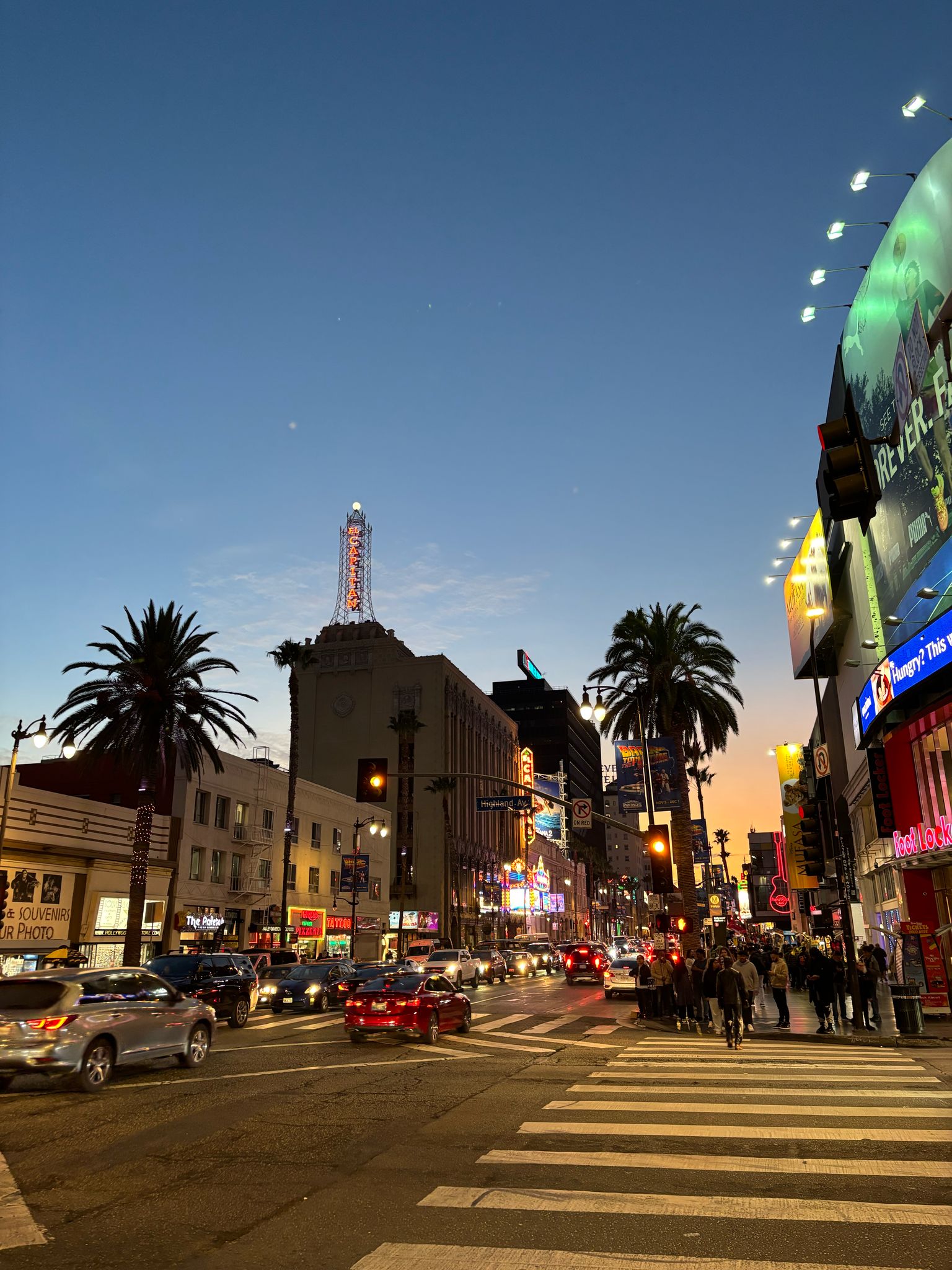
Walk of Fame ( Hollywood)
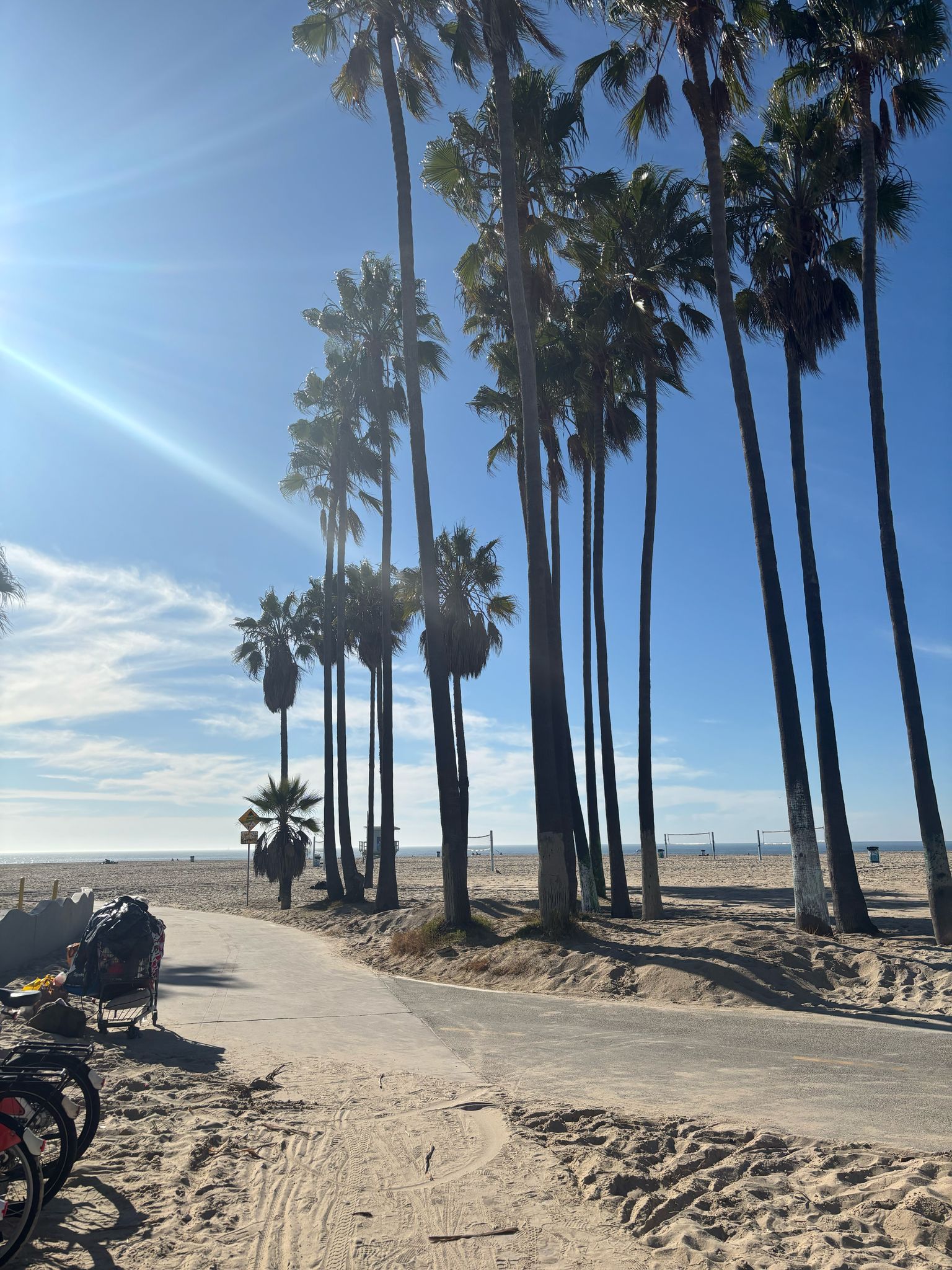
Santa Monica
- Details
"TAKE MY WORD FOR IT" with Edmond Loubeyre (Ch 221)
To introduce myself in a few lines, I am a Gadzart from Châlons (27ch221) currently enrolled in the Master of Engineering at UC Berkeley, in Mechanical Engineering with a concentration in Modeling and Simulation of Advanced Manufacturing Processes.
About accommodation, budget management, tuition fees:
The start of a new educational journey in another country that has a whole different culture that France can be stressful. The first issue to tackle is the accommodation. I was very lucky to have good friends in both my year coming to Berkeley with me and the year above us that just graduated. Therefore, four of us were able to take over the lease of the small city house that the 4 freshly graduated Gadzarts rented the previous year. It is 20 min away by bike from the campus and cheaper than the official Berkeley student housing.
The next issue that can come up especially when studying in the US is budget management. For that matter, I was also very lucky to receive help from the Gadzart community by receiving the Sequoia grant which was of great help. There are also great benefits to living with roommates, we were able to buy a car together so that we could go grocery shopping in cheaper stores and share every spendings. One other major help to pay for tuition fees and my living expenses is the positions that I obtained as a Teacher Assistant at the university also called GSI, Graduate Student Instructor. These positions are very coveted because they offer a tuition fee reduction and a monthly salary, but with some motivation and with the help of some people it is possible. For this semester I am a GSI in the Physics 7B course, which is thermodynamics, electromagnetism and electricity.
About my classes:
In my favorite class at UC Berkeley, which has the same name as my concentration, we started by studying Genetic Algorithms. They can be impressively powerful and simple to use and implement. We therefore coded our own general Genetic Algorithm from scratch. After that we studied advanced manufacturing processes that we modeled using equations like the first principle of thermodynamics, electromagnetisms or basic Newtonian mechanics that we then simulated on Python and finally we adapted and applied our genetic algorithms to those processes to optimize their parameters.
About my Death Valley trip:
Aside from my studies and GSI position I am trying my best to visit and enjoy the Californian and American way of life. My last 4 days trip, which was surreal, was in Death Valley. Death valley is between Las Vegas, and Los Angeles, and it offers incredible landscapes that we cannot find in France. Vast deserts full of colored dunes and rocks, craters caused by past volcanic activities and a salt lake. I went camping there and drove for hours on off-roads tracks (that punctured my tire) to reach a place with hot springs in the middle of nowhere called Saline valley.
Thank you!
I also want to add a short paragraph to thank all the AFAM community for their help and the one from the bay who is very active and organizes amazing gatherings!
I hope this short feedback can help some of you get a clearer idea on what it is to come to study in the US, I would definitely recommend it to anyone!
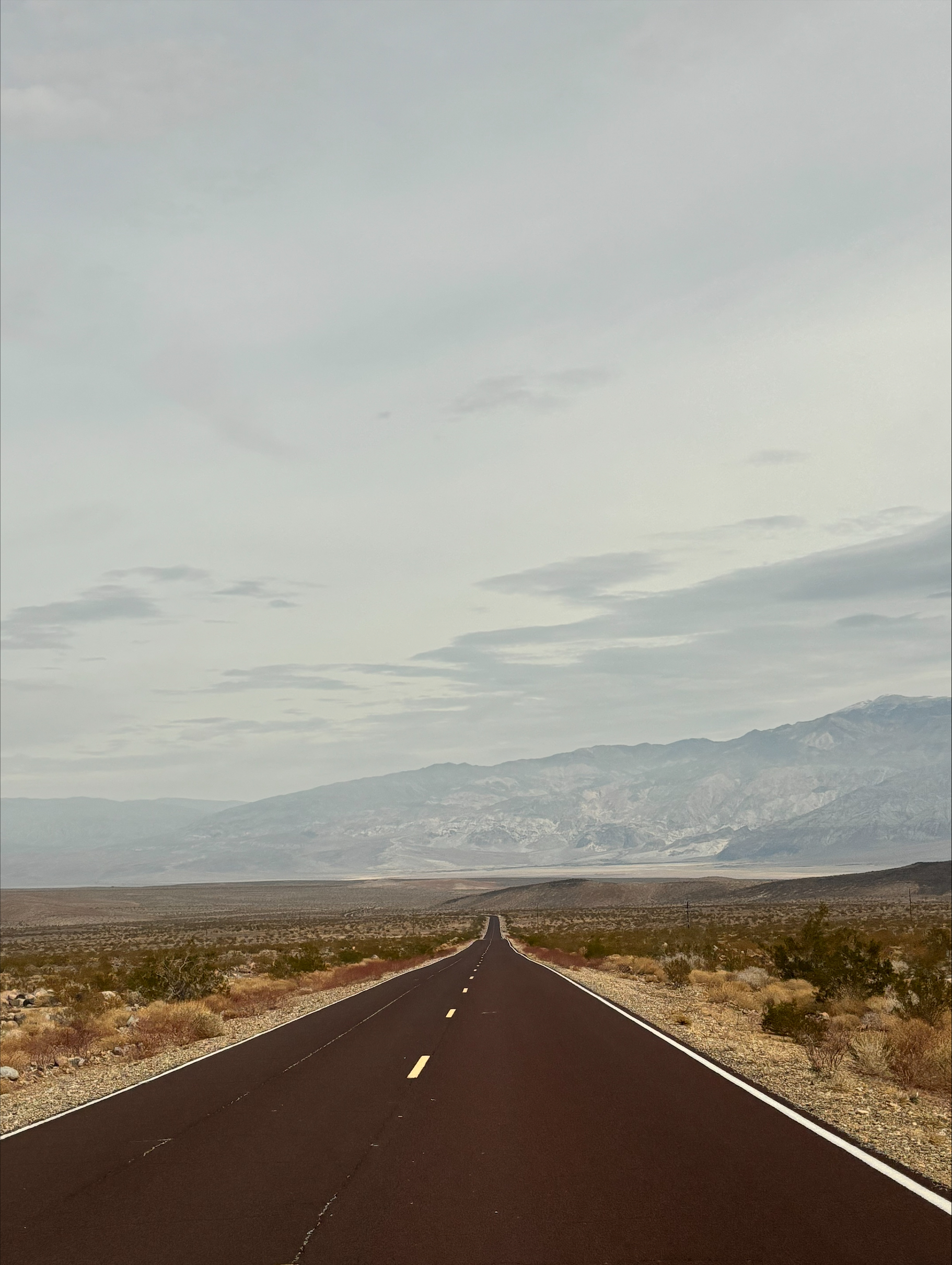
Photo 1: Entrance road to the Death Valley national park from Ridgecrest
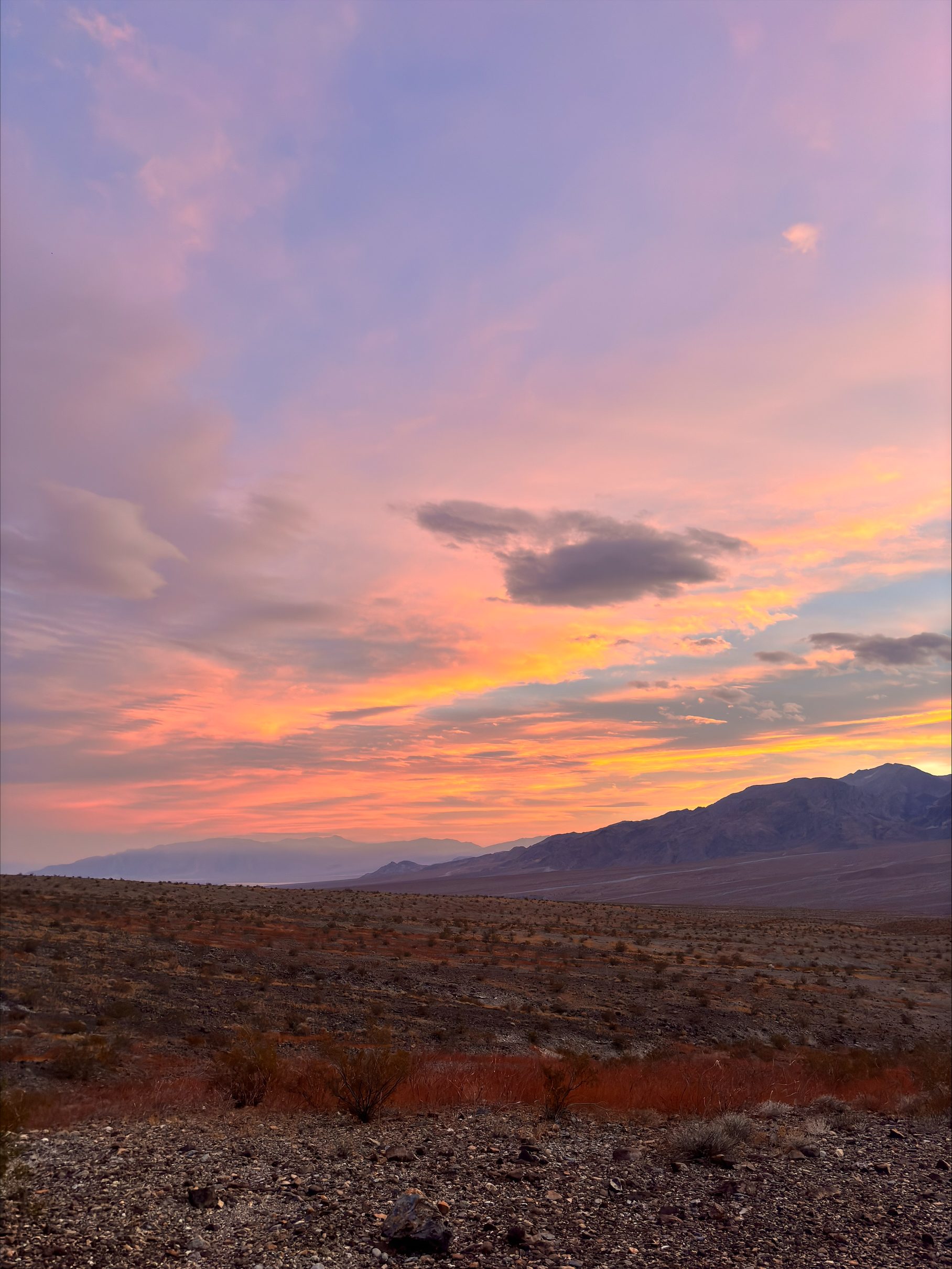
Photo 2 : sunset at Mesquite Campground
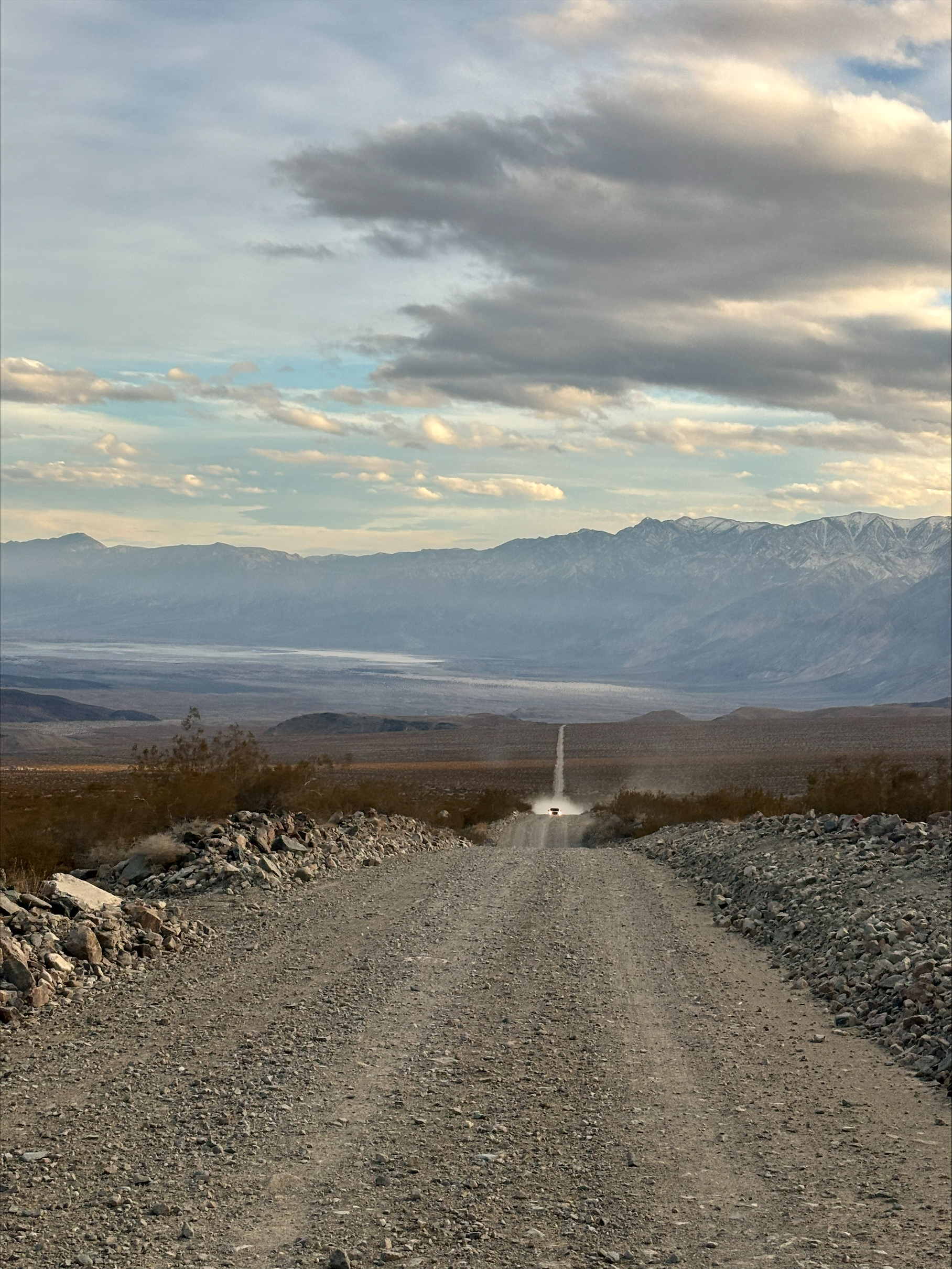
Photo 3 : Entrance road of Saline Valley from the Inyo Forest and mountain ranges
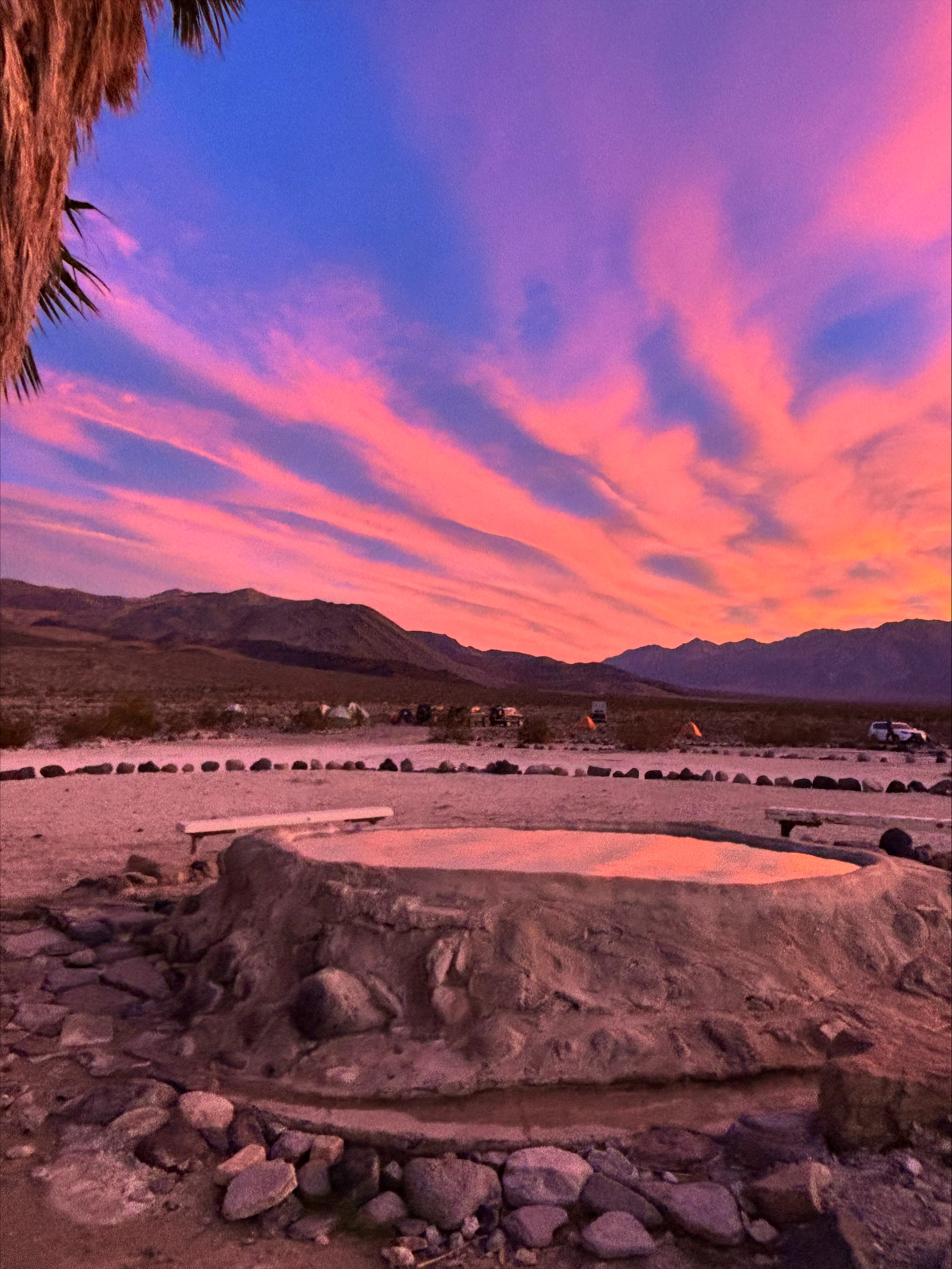
Photo 4 : Saline Valley Hotsprings at sunrise
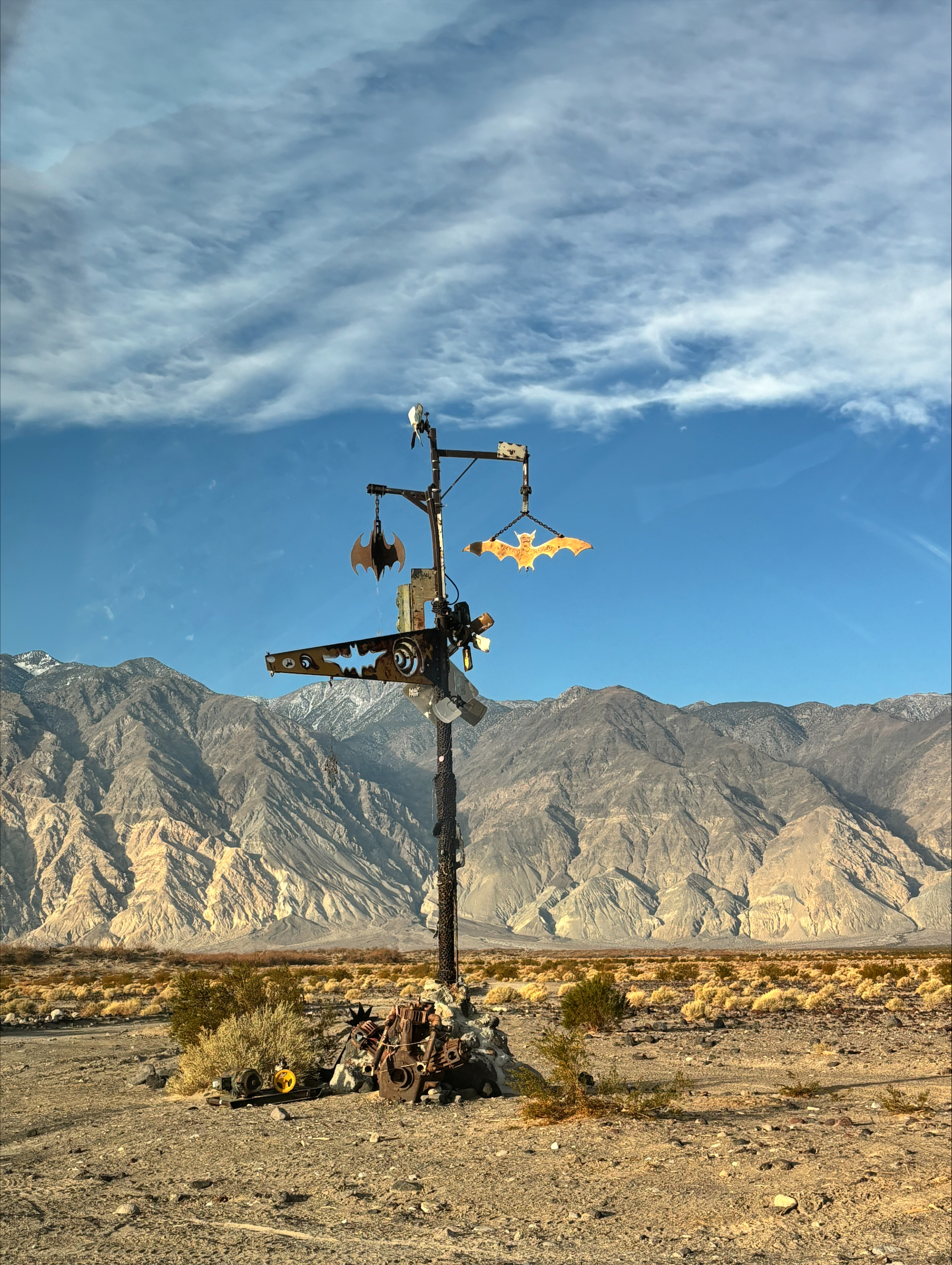
Photo 5 : Saline Valley Hotsprings entrance totem that was created by the visitors, with the bats - symbols of Saline Valley
All pictures are the courtesy of Edmond
Other interviews in "Take My Word For It" series:
- Details
AFAM: Hello Yann and thank you for agreeing to answer our questions. You are currently working jointly with NASA Jet Propulsion Laboratory, in Pasadena, CA, on the Development of Instrumentation for Astrophysics and Observational Cosmology. Please tell us more about your work for this project.
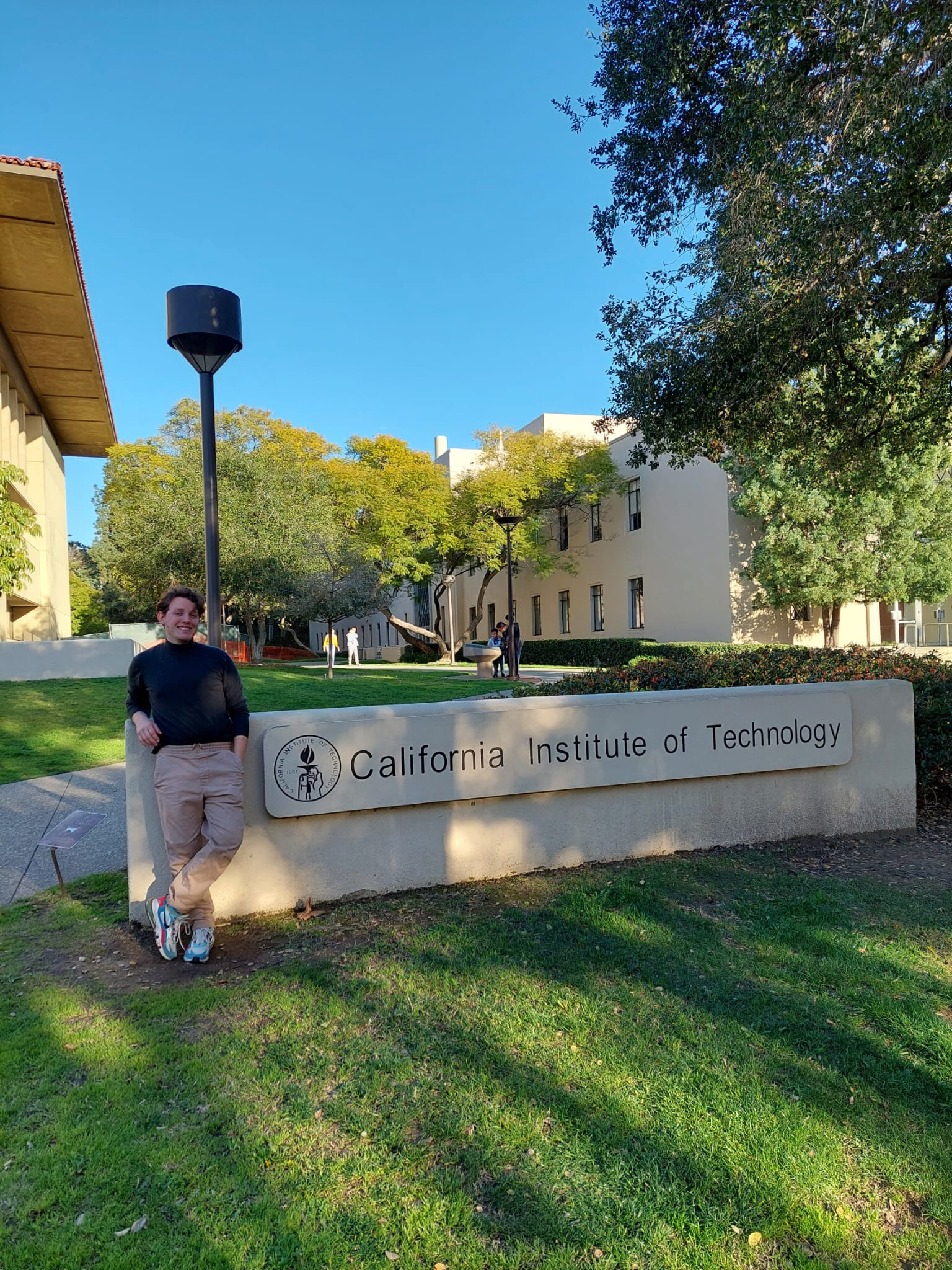
Yann: Hello and thank you for having me, it is a pleasure to answer your questions. My work at Caltech involves developing advanced cryogenic structures to optimize optics for astrophysical and observational cosmology instrumentation. More specifically, I collaborate with NASA’s Jet Propulsion Laboratory on enhancing Microwave Kinetic Inductance Detectors (MKIDs), which are cutting-edge superconducting sensors used in ground-based observatories and space satellites. These detectors play a great role in observing faint cosmic signals and we use them at the Caltech Submillimeter Observatory in Hawaii to study stellar and massive galaxy cluster formation, their interaction with the Cosmic Microwave Background, and other phenomena from the early Universe. My job is to ensure that their performance is maximized through thermal management and structural design. Additionally, I contribute to a phonon-mediated dark matter detection instrument using MKIDs, focusing on designing the cryogenic structure and the electronics to enhance sensitivity and accuracy. My work is basically a mix of physics, engineering, and space sciences, and it’s incredibly rewarding to see how these contributions can help understand some of the greatest mysteries of the Universe.
AFAM: before your work as a researcher for CalTech, you spent 2 months at NASA as a volunteer research assistant. Could you please tell us more about this opportunity that you had? In our Shasta program every year, we have students who are looking for internships in the aerospace industry. Do you think an internship at NASA could become a reality for some of them? What kind of background/skills/experience do they need to have in order to achieve it?
Yann: Yes, during my time at Caltech, I was invited through the internal network to volunteer on the preliminary phase of the LISA mission (Laser Interferometer Space Antenna). Alongside other scientists, we assessed various technical and scientific aspects of this mission aimed at detecting gravitational waves in space.
An internship at NASA can absolutely become a reality for students aspiring to a career in aerospace. There will always be a place for talented and passionate students ! To secure such an opportunity I think students should focus on excelling academically particularly in areas such as mechanics, electronics, space sciences, or systems engineering while seeking out hands-on projects and research opportunities. The multidisciplinary training at Arts et Métiers equips students with hands-on experience and a problem-solving mindset that are highly valued in the aerospace industry. Beyond technical skills, the ability to work effectively in teams, adapt to complex challenges, and communicate ideas clearly are essential qualities.
AFAM: how come that you decided to become a space systems engineer? What was the turning point and your road leading to this?
Yann: My journey to becoming a space systems engineer began with a childhood fascination for the night sky. Growing up, I was captivated by space exploration, watching documentaries, reading books, and sketching spacecraft designs. The turning point came in 2016 during my first year of Preparatory Class in France, when I enrolled in the Universpace Summer Program organized by CNES. This program was a transformative experience: I learned about the vast possibilities of the aerospace field and connected with experts and astronauts like Thomas Pesquet for the very first time. It was during this time that my passion for space truly took root.
Following my engineering degree at ENSAM, I pursued an advanced master's degree in Space Systems Engineering at ISAE-SUPAERO. While there, I participated in the SpacE Exploration and Development Systems (SEEDS) program, a collaboration with the European Space Agency (ESA). As part of the program, I worked on developing a lander to support future human space exploration missions on Mars, as well as a concept for a European commercial space station in Low Earth Orbit. Collaborating across Europe with teams of engineers and space professionals was truly a revelation for me. Then I had the amazing chance to be recommended to work at Caltech.
AFAM: how did being a Gadz’Arts help you in your professional life and career?
Yann: Being a Gadz’Arts is much more than just receiving a strong technical education, it’s about belonging to a community that truly supports you every step of the way. The Gadz’Arts network has been a constant source of help and encouragement throughout my journey. Whether during my studies or while working in different countries, I’ve always been able to count on the guidance and assistance of fellow Gadz’Arts. This sense of solidarity and mutual aid is one of the defining features of our community and has played a crucial role in shaping my career. Knowing that you’re part of a network where everyone is ready to lend a hand makes all the difference, both personally and professionally.
AFAM: What are your plans for the future ( if you could tell us a bit more about it)?
Yann: My immediate focus is on completing my ongoing projects at Caltech and JPL. In the long term, I aspire to lead innovative missions in space exploration with agencies like NASA or ESA. My ultimate dream is to one day pass the ESA astronaut selection process and play an active role in human space exploration missions. Beyond that, I hope to inspire and mentor the next generation of engineers and researchers, whether through academia or outreach programs, sharing my passion for space and the possibilities it holds.
AFAM: you live in Pasadena. Can you tell a bit more about your life in California? What are you doing in your free time?
Yann: Pasadena is a vibrant and inspiring place to live, especially for someone passionate about space exploration. In my free time, I enjoy hiking in the nearby San Gabriel Mountains, exploring California’s beautiful nature, traveling and surfing. I also spend time connecting with the local scientific community and attending public lectures or events at Caltech, JPL or The Planetary Society. On quieter days, I love getting lost in a good book, trying out new cooking recipes, and spending time with animals through pet sitting or in abandoned animal fosters.
AFAM: thank you for your time and good luck with all your future endeavors!
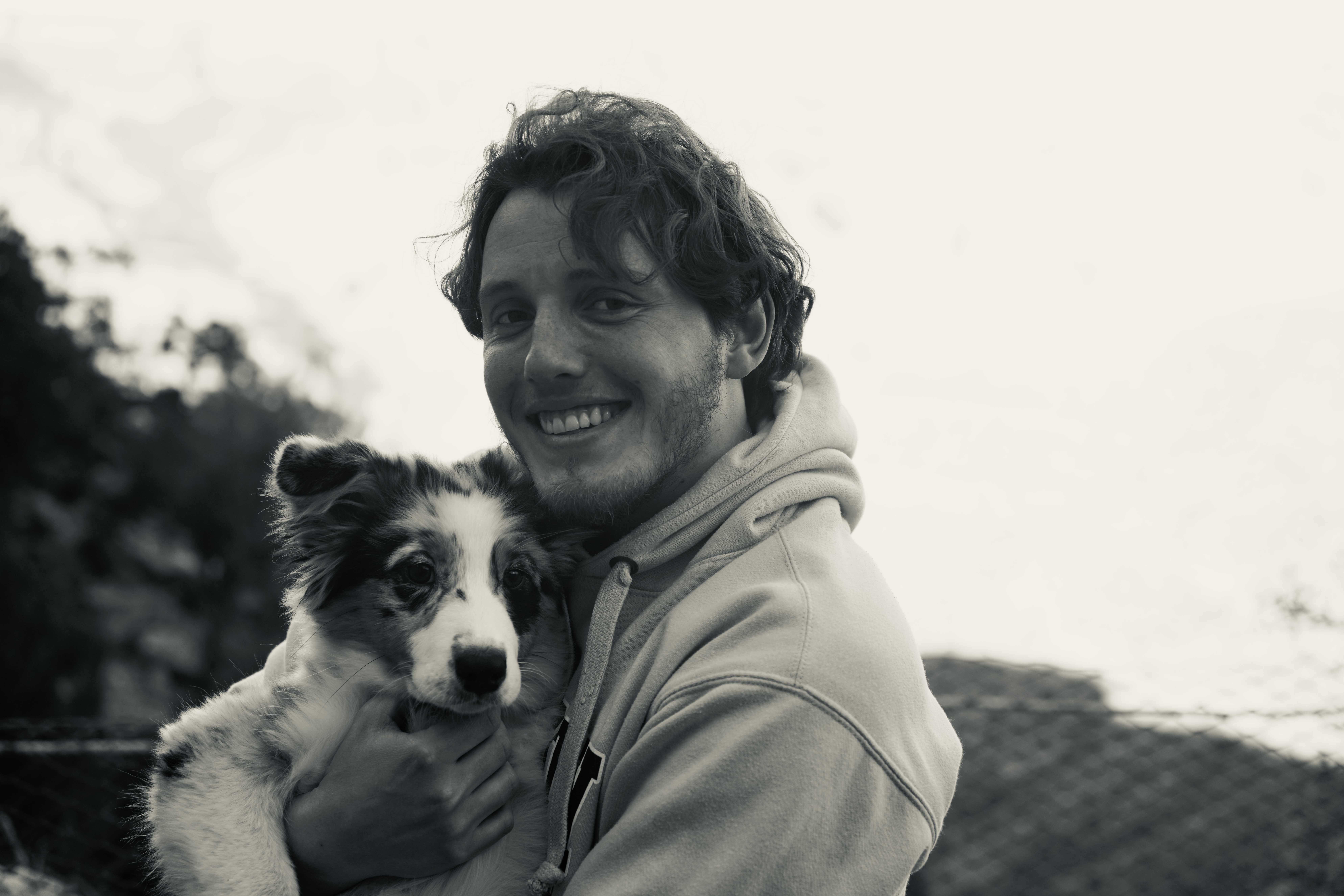
Pictures: courtesy of Yann
Other interviews in “Ad astra” series:
interview # 1 with Jean-Christophe Boulon (Me 213)
Interview #2 with Laurène Rokvam (Bo 210)
 BLOG /
  CALENDAR /
  DONATIONS /
  MENTORS /