
- Details
AFAM: Hello François et thank you for your time! You are a Supply Chain and Logistics Director at Solar Edge. Could you please tell us more about the company you work for and your position?
François: I am responsible for the Americas supply chain and logistics at Solaredge including forward and post sales logistics. Solaredge is a market leader in inverters, batteries and monitoring/management ecosystem for the solar installations for both residential and commercial as well as globally with strong presence in Europe. Americas represents more than 60% of the global business. The inverters primarily function is to convert the DC electricity generated by the solar panels into AC current.
AFAM: Was working in the smart energy company your first choice or is it more about opportunities that you wanted to take advantage of?
François:
I started in consulting with Ernst & Young and moved to corporate role in consumer electronics with companies like Netgear, Logitech and Corsair as well as semi conductor company like Cypress. I was always interested by the solar industry and when an opportunity came up, I made the move so I can both leverage my experience as well as contribute to a good cause
AFAM: What do you find is the most challenging and the most exciting in your Supply Chain and Logistics Director’s job?
François:
The most challenging is to be able to adjust to the frequently changing regulatory policies impacting the solar industry greatly. And the most exciting is managing and optimizing coping the ever changing supply chain hurdles with inflation pressure, tariff, fuel surcharge, geopolitical trends among others: there is never a boring week. In addition, we now have to integrate on how to best use AI in managing our business.
AFAM: Could you advise any energy startups to watch in 2026?
François:
Some of the key elements is to understand and manage proactively the fast changing factors as described earlier as well as keep an eye on your various customer financials (their financial health and financing model) to reduce risks and generate growth. But overall, solar is not going away despite the ups and downs so it is a good industry to be involved in the long term.
AFAM: How did being a Gadz’Arts help you in becoming who you are today?
François:
It helped me understand the big picture but also dive down into details, be adaptable and resourceful and not be intimidated by challenges, be able to connect and drive at the human level with all kinds of individuals and teams internally and externally
AFAM: How long have you been living in the SF bay area? What do you enjoy doing in your free time?
François:
Oh my gosh! I have now been living more than 25 years with 2 kids now out of college and successful in the working world. I enjoy many things from traveling, celebrating with family and friends (and our AFAM group), staying active with sports (for now!), staying stimulated through reading, culture events and others. Finally it is all about continuing growing as a person through experiences, relationships and curiosity.
AFAM: thank you, François!
Other interviews in “Green and Clean” series:
Interview with Guenael Prince (Cl 201)
Interview with Raphael Zaccardi (Cl 182)
Interview with Lucie Marionnet (Class 2019)
- Details
AFAM: Hello Henri, and thank you for agreeing to answer our questions. You are currently a Research assistant at David Rittenhouse Laboratory (University of Pennsylvania). Please tell us more about your role and the journey that led you to it? How come that ( and when) you became interested in astronomy?
Henri:
Hello Albina,
I am happy to answer these questions if it helps other students. I am currently interning in the Department of Physics and Mathematics at UPenn specifically within the David Rittenhouse Laboratory, which focuses on cosmology and the study of the universe's "first light" (dating back about 14 billion years). Coming from an engineering background, I don't work directly on astrophysics itself. Instead, I am developing a tool to assist the researchers. Indeed UPenn, in partnership with many other universities worldwide, recently acquired a telescope in Chile (the Simons Observatory Large Aperture Telescope) designed to study these light rays. However, a calibration issue arose regarding the two mirrors (primary and secondary) used to direct light toward the receivers. Gravity and heat can cause the mirrors to shift slightly, completely skewing measurements because the further out you observe, the more significant the impact of even a tiny angular error becomes.
For the past three months, I have been working on a method to measure mirror positioning using photogrammetry. This involves setting up a network of cameras that, by combining multiple viewpoints and using triangulation techniques, allows us to move from 2D (like a standard photograph) to 3D, enabling us to track the mirrors' displacement.
This internship was something I gravitated toward over time. I have always had a strong interest in cosmology; it is a complex, emerging field that compels one to consider both scientific and philosophical questions. After all, studying the universe's first light inevitably leads us to ask what existed before it and what will come after. So, when I decided I wanted to do an internship in a university lab, I told myself that since I would only be there for a few months, I might as well do something that truly inspired me and took me out of my comfort zone; naturally, I chose astrophysics. All I had to do then was find laboratories in the field and send unsolicited applications via email, highlighting my background and past experiences.
AFAM: every year we have students looking for internships in the United States? Why do you think you were a successful candidate for the role at David Rittenhouse Laboratory? What piece of advice would you give to students interested in finding an internship in the United States?
Henri:
I believe my application was accepted by the laboratory for several reasons that didn't necessarily hinge on the U.S. context itself. First, I carefully targeted the labs I wanted to apply to by looking at how my profile specifically aligned with their needs. I researched their fields of study and made sure to present myself naturally as a compelling candidate. Additionally, alongside my background at Arts et Métiers, I had the opportunity to pursue a computer programming curriculum at École 42. This allowed me to easily highlight the dual nature of my profile combining mechanical engineering with computer engineering skills. I also think I stood out because I used that initial email as a hook, clearly stating that I was 100% self-sufficient, which reassured them that administrative procedures wouldn't be an issue. Once the hook worked and the video interview was scheduled, I was able to show my true self, as it is easier to build a rapport via video call than through email. Finally, once I sensed that my profile was a good fit and that I got along well with the researchers, I was able to negotiate certain terms.
I would say the key factor is a gradual approach; hiring a foreign student isn't necessarily easy for an American university, given the lengthy administrative processes and the competition from American students who are easier to hire but also want these internships. You need to emphasize that hiring you is their best option and that you are fully prepared to handle the administrative requirements. You also need to be available and organized regarding interviews, video calls, and emails, despite the time difference.
AFAM: You became a Mayoux-Dauriac 2026 ( Paris campus)? Congratulations! Please tell us a bit more about your different interests outside of experimental cosmology?
Henri:
Haha, yes that’s right, I won the 2026 Mayoux-Dauriac Prize, and I’d like to thank everyone involved in organizing it each year once again. It is a truly enriching event, both for the stylistic challenge it offers and for the €1,000 prize I was able to win.
I am indeed a student with a keen interest in the sciences particularly physics but I also have a passion for the humanities, especially the art of rhetoric, counter-argumentation, and debate. As I mentioned earlier, one of the things I find so appealing about cosmology and astrophysics is the way these fields prompt us to question things and lead us into complex, mind-bending philosophical reasoning. I am also an avid athlete who enjoys setting medium-term goals, striving to achieve them and then moving on to new ones.
AFAM: how did being a Gadz’Arts help you in your professional life so far?
Henri:
To be completely honest and setting aside the absolutely brilliant support from AFAM being a Gadz'Arts hadn't really helped me in my professional life up so far. I have no doubt that it will one day, though, because the Arts community, thanks to its alumni, possesses a truly unique spirit of mutual support.
AFAM: What are your plans for the future (if you could tell us a bit more about it)?
Henri:
I must admit that my plans for the future aren't entirely clear yet. My experience here at UPenn has been absolutely incredible on a personal level. I’ve learned a great deal about astrophysics research and how a laboratory operates, but I’ve also learned a lot about myself. Consequently, after this internship, I plan to step away from research for a while and pursue other paths. To start, I’ve applied to become an officer in the French Army through a partnership between the military and various French engineering and business schools (the Partenariat Grandes Écoles). I am currently awaiting the final results, but this opportunity would allow me to spend six months split between the Saint-Cyr military academy and an assigned regiment. Beyond that, the future is less certain, I might apply for a public policy program to work in the civil service, bringing an engineering perspective to issues like climate change and technological sovereignty. Another option would be to pursue a career in core engineering within the defense sector.
AFAM: you live in Pennsylvania. Can you tell a bit more about your life outside of work? What are you doing in your free time?
Henri:
Yes, I was lucky enough to live in Philadelphia and right in the middle of the 2026 World Cup, no less. The atmosphere was truly special, and I’m so glad things worked out that way, because I think the vibe there was genuinely unique. Outside of work hours, I had the chance to explore New York (an hour and a half away by train) and Washington (two hours away), visiting all the fabulous museums and monuments in those cities, in addition to the ones in Philadelphia. During the week, I work out a lot at the campus's many gyms.
AFAM: thank you for your time and good luck with all your future endeavors!
Pictures: courtesy of Henri
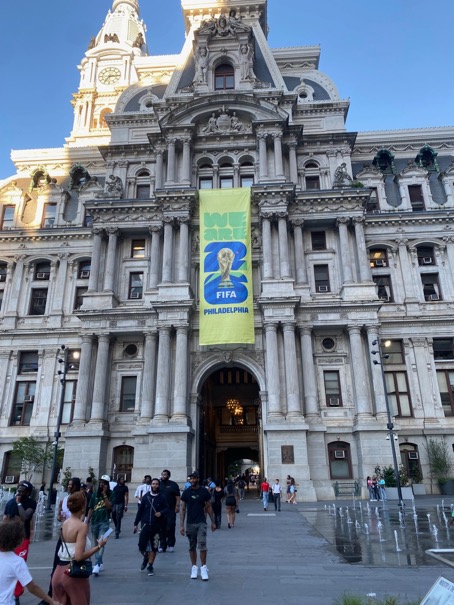
Philadelphie - City hall
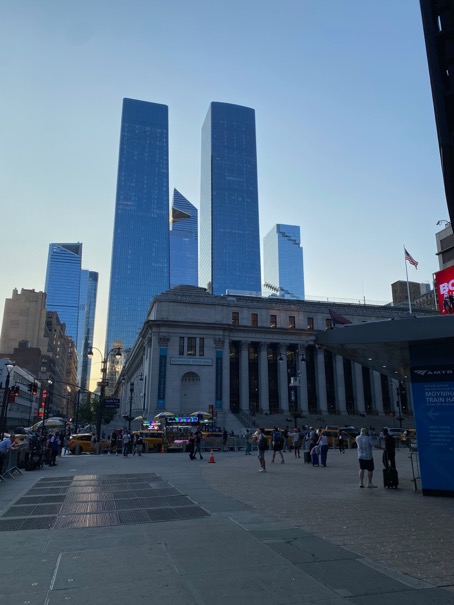
New York - Train station
Other interviews in “Ad astra” series:
Interview # 1 with Jean-Christophe Boulon (Me 213)
Interview #2 with Laurène Rokvam (Bo 210)
Interview #3 with Corentin Lazarus ( Me 209)
Interview #4 with Yann Sadou (Bo 218), researcher at Caltec
- Details
AFAM: Hello Jean and thank you for this opportunity to ask you a few questions. You are a Graduate engineering student majoring in mechanical engineering at UC Berkeley. Could you please tell us a few words about the road that led you to Arts et Metiers and most importantly why and when you decided to become an engineer?
Jean:
I've always been fascinated by inventors and people who create new technologies. Quite early on, I realized that engineering was probably the best way to combine science, problem-solving, and innovation. I also knew from high school that I wanted to study in the United States one day.
When I entered Arts et Métiers after my preparatory classes, I noticed that many students were able to spend part of their studies in the US. That became a goal for me. More specifically, I wanted to come to California and experience Silicon Valley, which is probably one of the most exciting places in the world for innovation and technology.
So throughout my studies, I worked toward that objective, and eventually I had the opportunity to join UC Berkeley.
AFAM: Could you tell us a bit more about your studies and life in California?
Jean:
When I arrived at Berkeley, I wanted to take full advantage of the opportunity to explore subjects beyond traditional mechanical engineering. Alongside my core courses, I progressively focused more on Data Science, Machine Learning, AI, and software engineering. These fields complemented my engineering background and completely changed the direction I wanted to take after graduation.
Besides that, I became as a Teacher Assistant in an Oceanography course during Fall 2025, which was actually quite far from my academic background.
I ended up loving it. It really structured my semester, and teaching students every week was extremely rewarding.
The following semester, I decided to continue as a TA, but this time in a completely different subject: Ethics in Engineering. Again, it was a fascinating experience.
Being a Teaching Assistant also helped financially. The salary and tuition benefits covered all of my educational expenses.
Outside of class, I also spent a lot of time working on software and AI projects, which allowed me to gain practical experience and ultimately transition from mechanical engineering toward AI engineering.
That gave me the opportunity to fully enjoy California. I traveled a lot, discovered many places across the state, joined a local golf club and managed to play almost every week, which was a pretty nice bonus!
AFAM: What was the most challenging for you in the US?
Jean:
The biggest challenge was finding a way to continue the experience in the US after graduation.
Before arriving, our focus was on getting admitted to a great university. But once you're here, you realize that employers care much more about your professional experience than about the name of your school.
The competition is extremely strong, especially in today's job market. Over the past three years, hiring has become much more difficult, particularly for international students who also require visa sponsorship.
Breaking into AI without a traditional software engineering background was another challenge. It required a lot of personal work outside of my coursework to build the necessary skills and demonstrate them through projects.
Beyond that, obtaining a work visa within the required timelines has also been a challenge that I didn't fully anticipate before coming here.
AFAM: Can you share a little bit about your future plans?
Jean:
I'm very happy to say that I am now AI Engineer at Augura Health, a biotechnology startup based in San Francisco, California.
The company is developing an agentic AI platform that helps automate and accelerate clinical research by analyzing scientific literature and generating structured evidence for clinical studies.
This position is exactly the kind of opportunity I was hoping to find when I decided to come to Berkeley.
I would also like to express my gratitude to my Shasta mentor, Alain Mutschler, whose guidance, encouragement, and continuous support were invaluable throughout this adventure.
AFAM: What is one favorite way to spend your free time (hobbies, weekend activities)?
Jean:
In my free time, I mainly enjoyed playing golf. Berkeley also has a large French community. We traveled a lot together throughout the year, including trips to Vegas, LA, Tahoe, Yosemite, Death Valley, and many other amazing places.
One of the highlights of the year was spending Spring Break in Hawaii.
AFAM: Thank you, Jean!
Please read other interviews in our "Zoom on" series
All pictures: courtesy of Jean
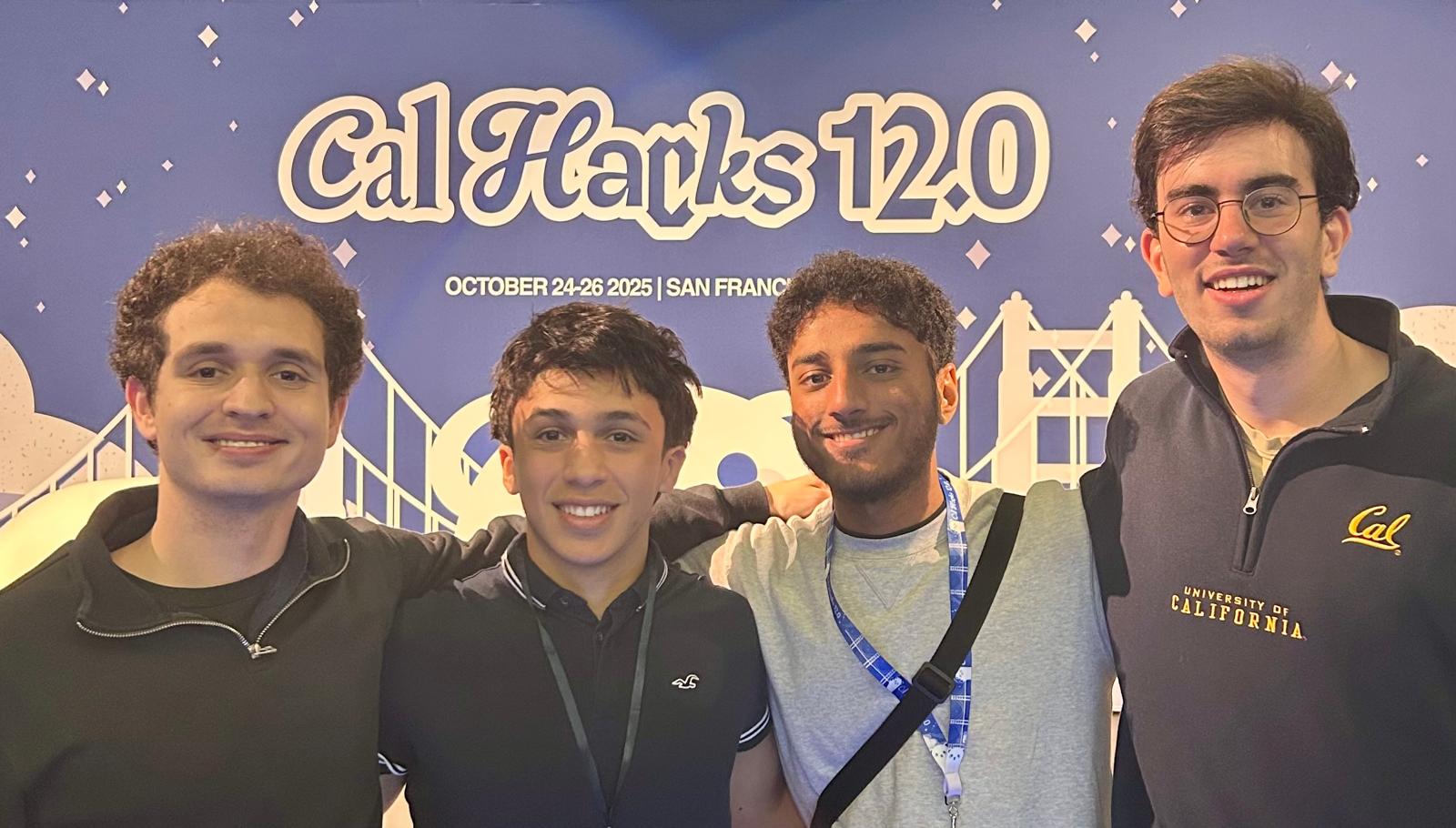
Jean with NYU students at Cal Harks event in San Francisco
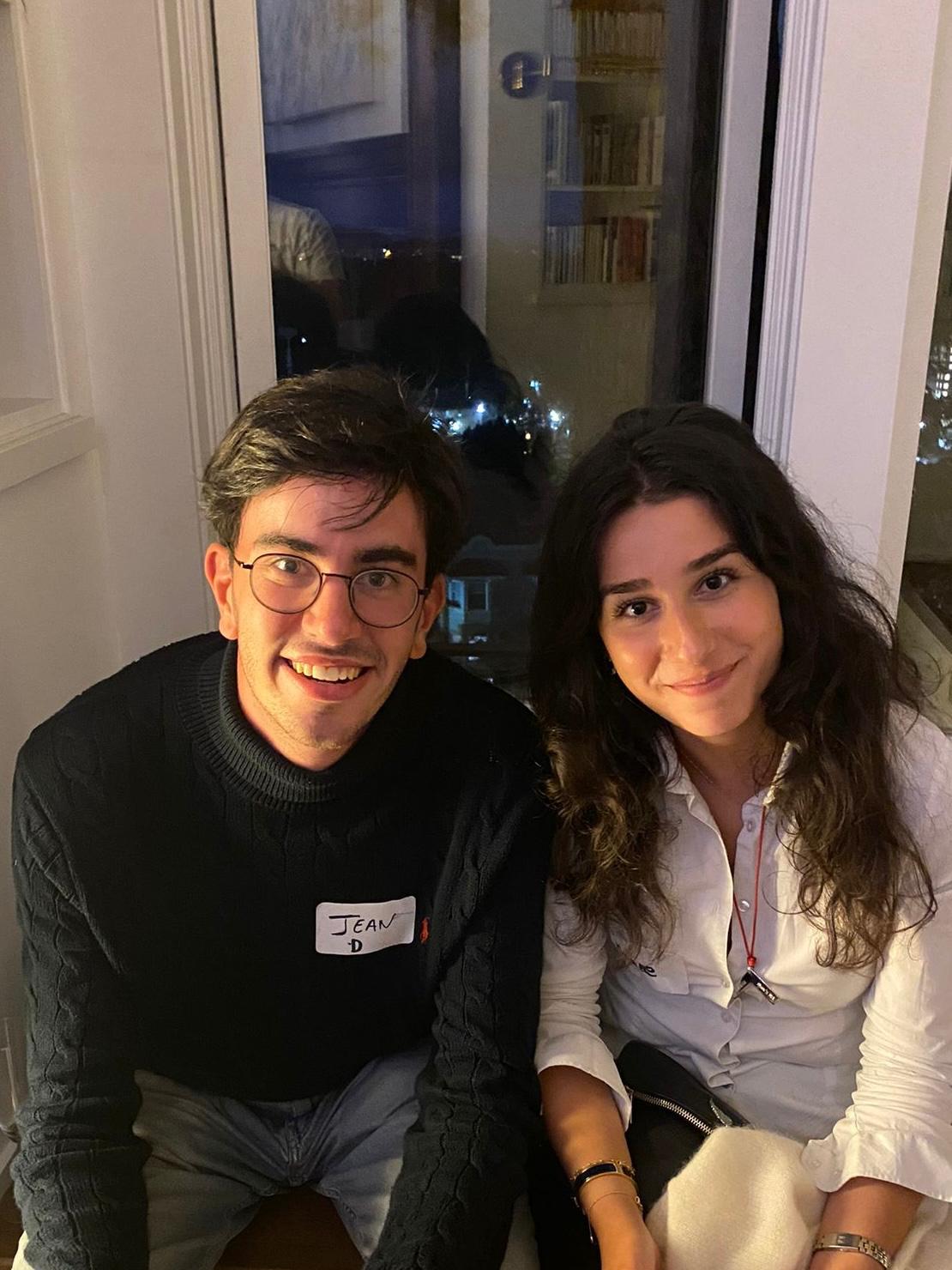
Jean avec Marie Imad (A&M/Stanford student)
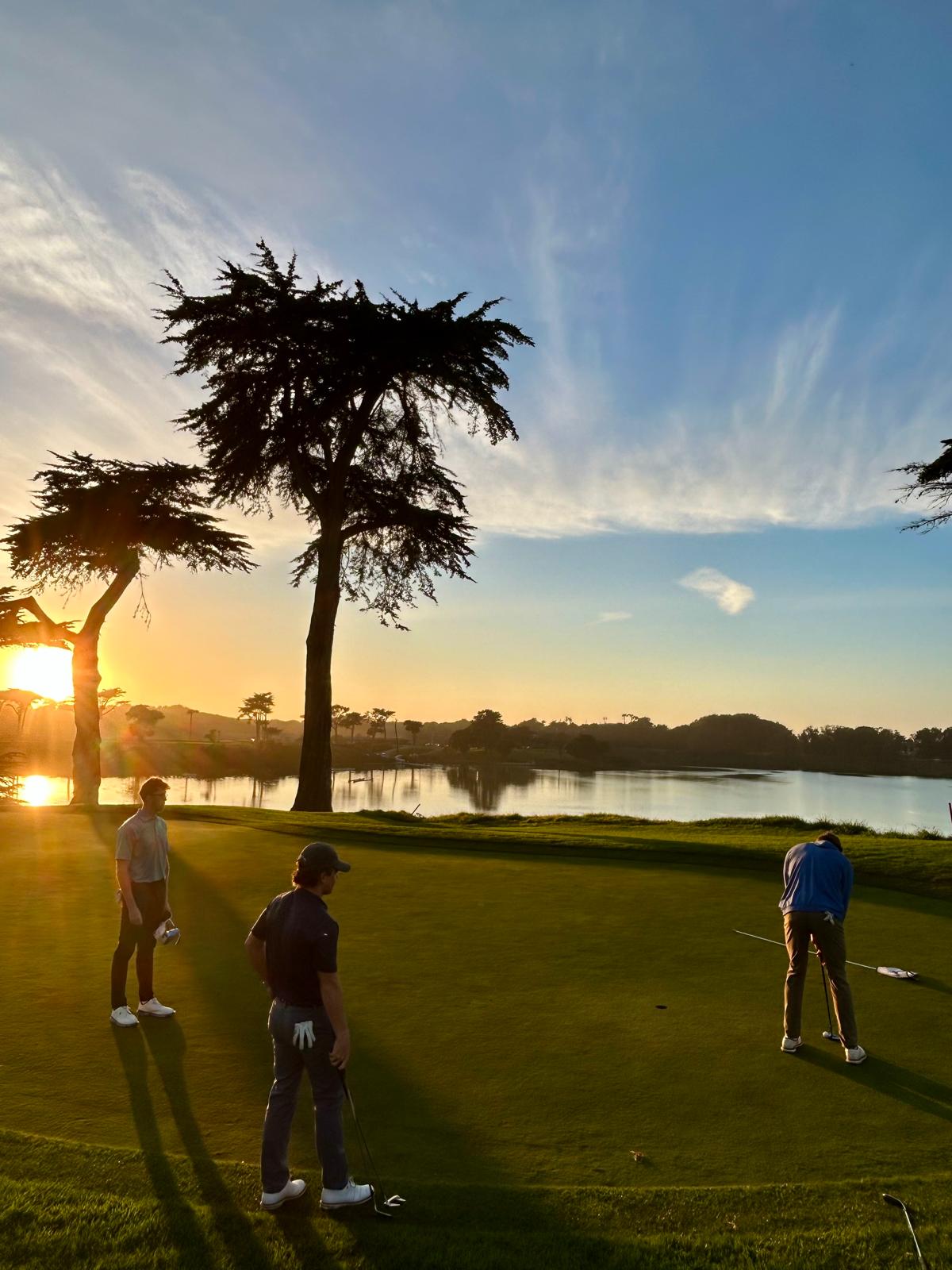
Jean playing golf in San Francisco
- Details
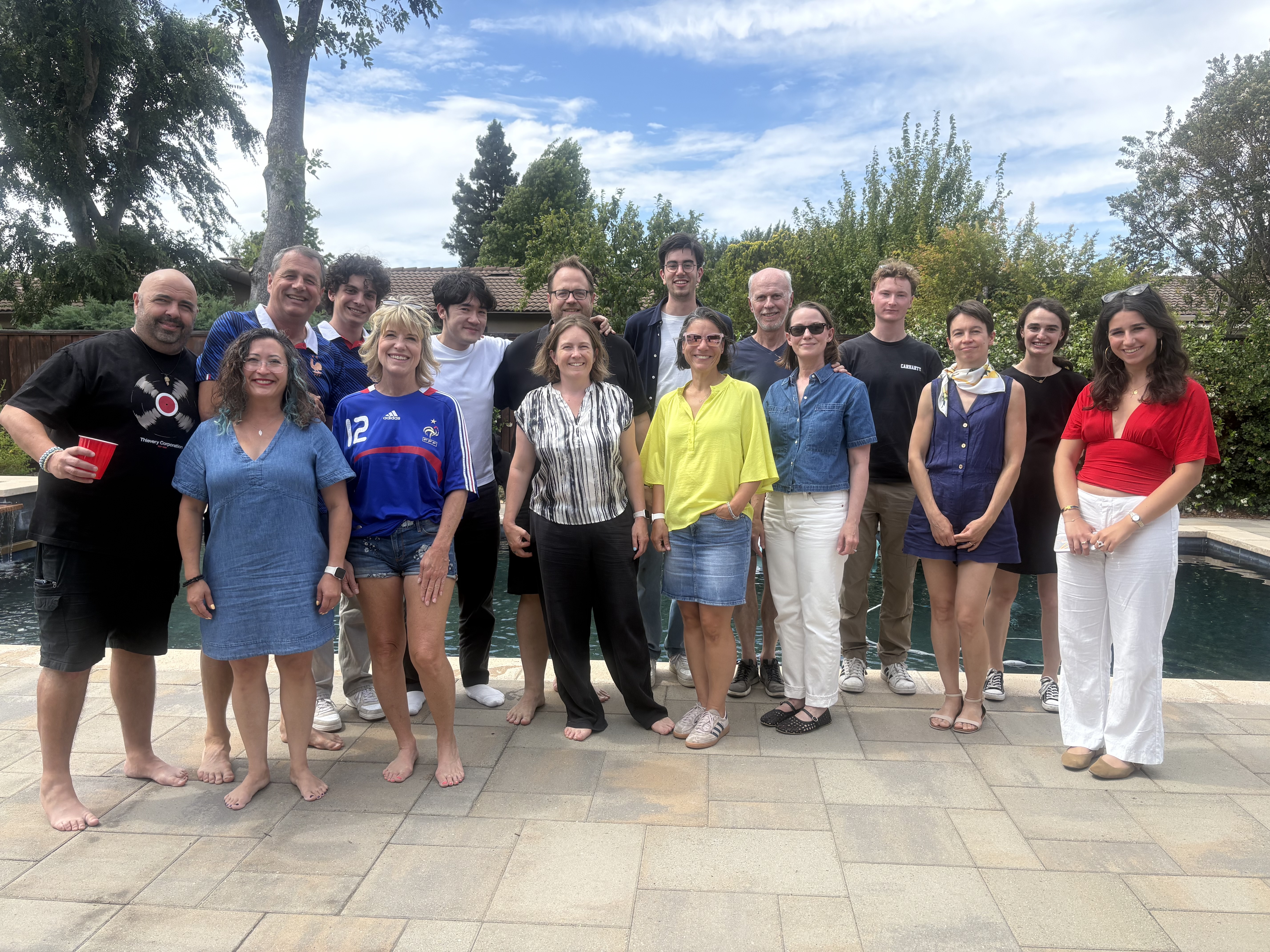
Gadz'Arts in the San Francisco Bay Area gathered yesterday to watch the Spain–Argentina World Cup Final, celebrate Bastille Day (a few days late!), and cool off with some pool time and games.
A big thank you to Aurore and Jean for opening their home to us, and to Nicolas for organizing this wonderful afternoon!
We look forward to seeing everyone again at our next Gadz'Meet, taking place over the September 19–20 weekend. See you there!
- Details
AFAM: Hello Tanguy, and thank you for agreeing to answer our questions. You are currently a Master student at Purdue University in Aeronautics and Astronautics. Please tell us more about your journey and what led you to it? How come that ( and when) you became interested in aeronautics?
Tanguy: Thank you so much for having me! Honestly, my journey really started just by looking up. Ever since I was a kid, I’ve been absolutely fascinated by the stars, and I would spend countless hours at night just staring at the sky. Growing up, that curiosity was heavily fueled by science fiction. Exploring universes like Star Wars and seeing the concept of multi-planetary species completely captured my imagination. It naturally drove me to learn everything I could about space transportation.
As I dug deeper, I developed a massive fascination for rocket engines. The idea of taking that kind of raw, explosive power and engineering a way to perfectly control it to conquer space just blew my mind. I knew I had to be a part of it. To turn this dream into a reality, I went through the demanding classe préparatoire system and joined Arts et Métiers to build a rock-solid foundation in mechanics and energetics.
However, the landscape in France is a bit different. Most of the advanced space propulsion research is strictly concentrated within the industry, meaning there are virtually no opportunities to get involved in hands-on propulsion research at the academic Master's level. I wanted to be right in the thick of the research and testing, which is exactly why choosing Purdue University's Aeronautics and Astronautics program was an absolute no-brainer for me!
AFAM: before your master’s year at Purdue, you were an intern at NAASC Center Spatial Universitaire de Nouvelle Aquitaine. What kind of knowledge and skills did you gain there?
Tanguy: It was my very first real exposure to the space industry, and it was exactly the opportunity I needed to get my foot in the door. One of my biggest takeaways was realizing that even though Arts et Métiers isn't strictly an aerospace-focused school, the rigorous training we receive in areas like subtractive machining, additive manufacturing, and complex design are absolutely essential in the space sector.
I got to dive right in and apply those exact skills, focusing heavily on Computer-Aided Design (CAD) and physically machining a structural and thermal mock-up of the NanoNAASC satellite to prepare for its CNES certification. Getting to physically build and test the structure of a real satellite project made the dream of working in this field feel incredibly concrete and tangible for me!
AFAM: What classes did you take at Purdue? What did you enjoy the most about your classes and campus life?
Tanguy: Since my major is in propulsion, I took classes like Advanced Rocket Propulsion, Combustion, Computational Fluid Dynamics, Gas Dynamics, and Spacecraft Electric Propulsion. I also chose to take courses in Artificial Intelligence, as it is a massively expanding sector right now and highly relevant for the future of engineering.
But honestly, what I have enjoyed the most goes way beyond the coursework itself. The real highlight has been the opportunity to do research and actively contribute to the chemical propulsion community. That is what makes this experience so unique and deeply rewarding. In fact, I expect to publish a research paper on Rotating Detonation Rocket Engines (RDREs) in the coming months, which I am thrilled to co-author alongside leading figures in the field of space propulsion!
AFAM: how did being a Gadz’Arts help you in your professional life and studies in the United States?
Tanguy:
The Gadz'Arts community has been absolutely crucial for me. When I was putting together my applications for US universities, the cohort of students from the class above me who had already moved to the States were incredibly helpful. To be completely honest, I don't think I would have ever been able to join such a prestigious institution in the aerospace field without their guidance. They took the time to review my cover letters and my resume, and helped me navigate the many strategic choices you have to make during the application process.
Later on, I also received amazing support from Christophe Tardieu. He really helped me rebuild my resume and perfect my "elevator pitch" to adapt them to the US format. That mentorship gave me a huge advantage in successfully building and expanding my professional network over here!
AFAM: What are your plans for the future ( if you could tell us a bit more about it)?
Tanguy: I have truly loved my time here! Being in the US gives you the incredible feeling that absolutely anything is possible. However, the reality is that it is becoming increasingly complicated for international students to secure work in this country. This is especially true in the space sector, which has always had its own strict hurdles and regulations. Even right now, within the university, there are certain resources and materials I simply am not allowed to access as an international student.
On the flip side, I have deeply enjoyed my research activities here. So, moving forward, my plan is to look for job opportunities in the space sector back in France, while also exploring broader job opportunities here in the US!
AFAM: you live in Indiana. Can you tell a bit more about your life? What are you doing in your free time?
Tanguy: Indiana is definitely a very rural state and might not be a top tourist destination, but it is honestly a fantastic place to live! It is the true American heartland, which gives you a genuine experience of what the "real" US is like, far away from the typical big coastal cities. That being said, we aren't isolated at all—Indianapolis is just an hour away, and Chicago is only a two-and-a-half-hour drive, which is absolutely perfect for weekend getaways!
The town here is almost entirely built around the university, making it a quintessential American "college town" that is completely designed around student life. In my free time, I really love taking advantage of the incredible sports facilities the university provides. It is the perfect way to unwind and fully enjoy the campus experience!
in France, while also exploring broader job opportunities here in the US!
AFAM: Thank you, Tanguy!
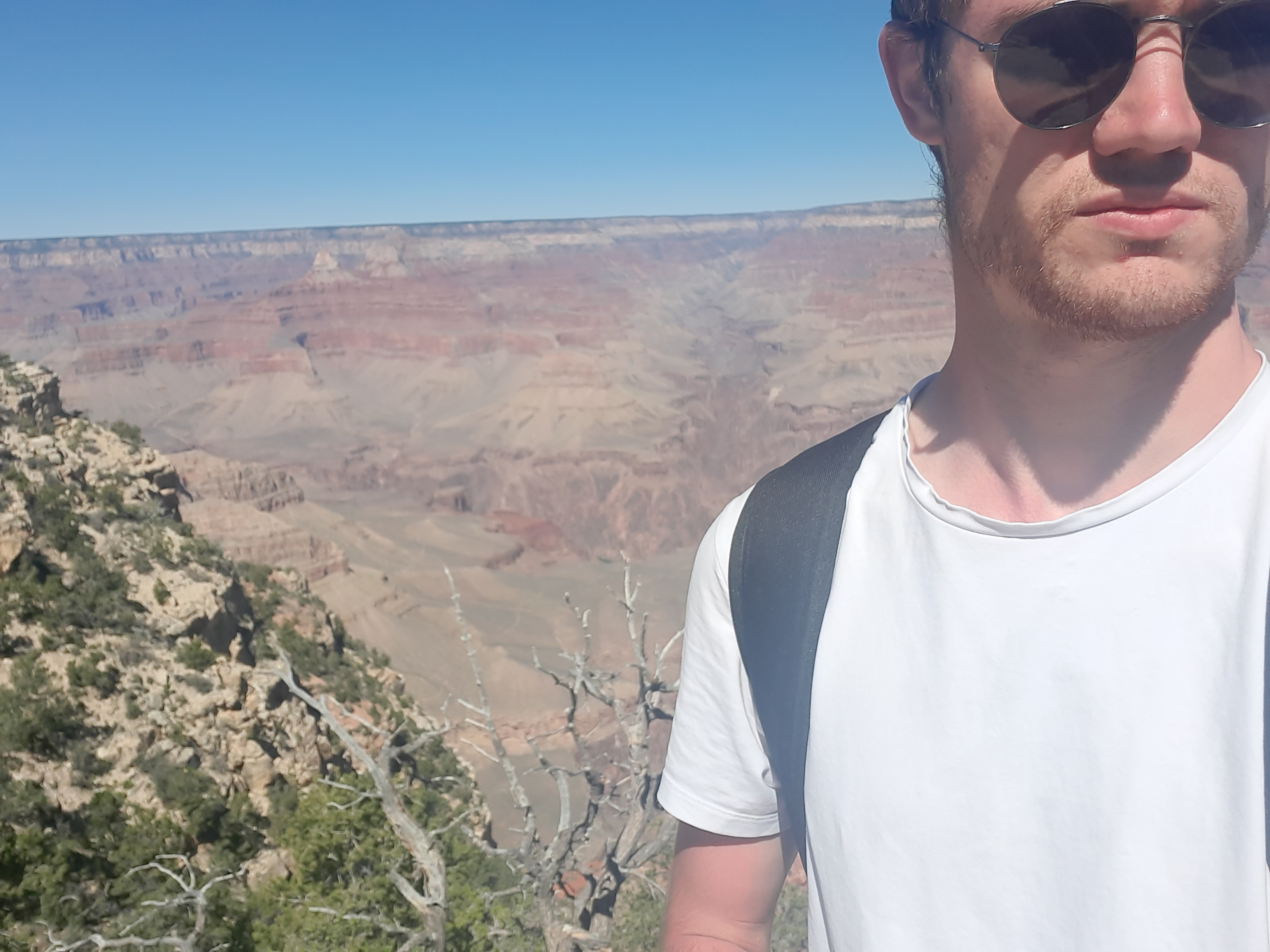
Tanguy at Grand Canyon
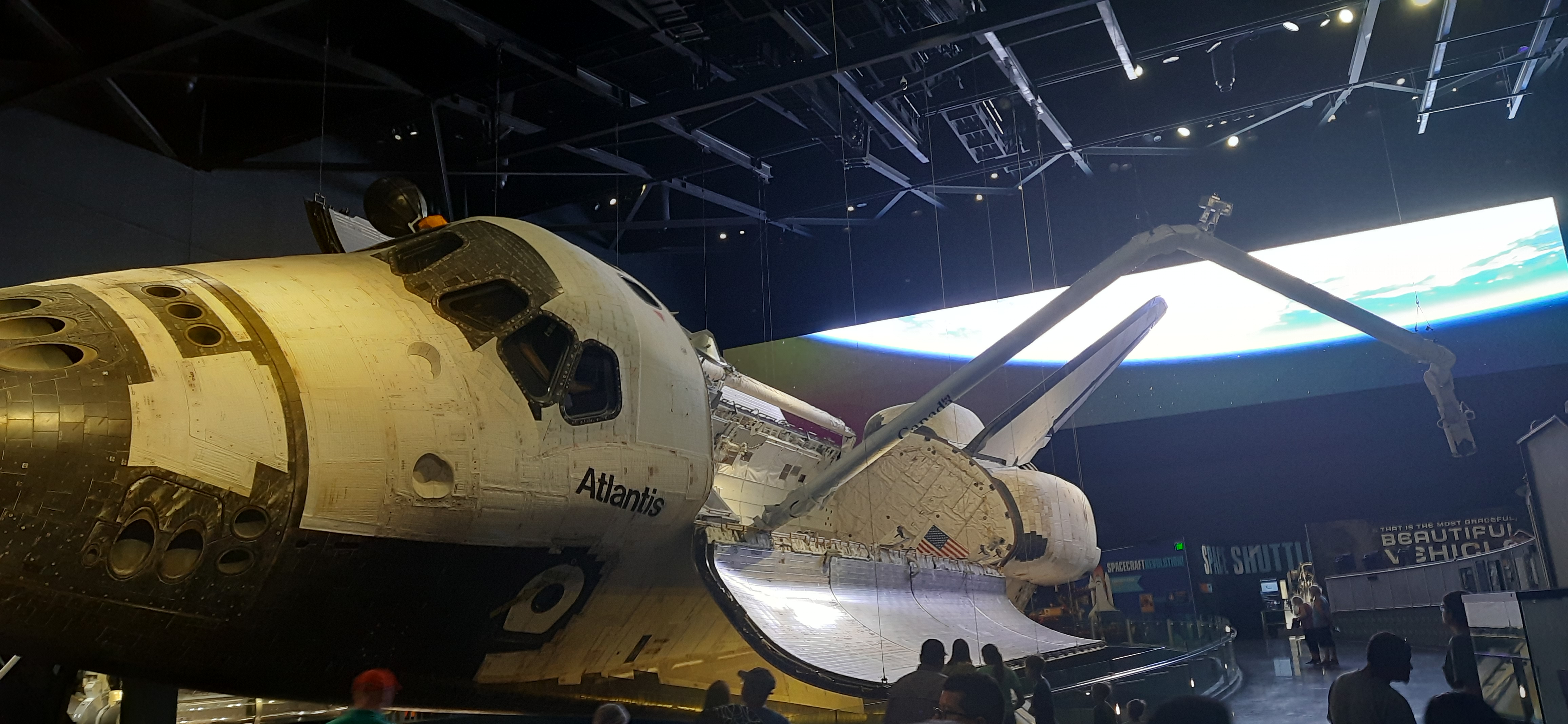
Kennedy Space center, Florida
All pictures: courtesy of Tanguy
Other interviews in “Ad astra” series:
Interview # 1 with Jean-Christophe Boulon (Me 213)
Interview #2 with Laurène Rokvam (Bo 210)
Interview #3 with Corentin Lazarus ( Me 209)
Interview #4 with Yann Sadou (Bo 218), researcher at Caltec
- "Zoom on" - interview with Maeva Hamidi (Class 2023), apprentice student, former intern at Safran Nacelles, Indianapolis
- French Alumni Happy Hour was organized by HEC alumni at the Four Seasons Hotel Silicon Valley on June 10, 2026
- Zoom on: interview with Georgia Tech graduate students Florian Vanhuysse (Li 223) and Jean-Louis Roy (Li 223)
- AFAM June board meeting results: new board members elected and 22 Sequoia # 2 grants approved
- “Zoom on”: Interview with Hippolyte Malgrain ( Ch 221), VIE, HEF Group
 BLOG /
  CALENDAR /
  DONATIONS /
  MENTORS /